Welcome to Jiangsu Yigao Medical


 ENG
ENG

 English
 Español
Welcome to Jiangsu Yigao Medical

A hydraulic operating table is a surgical platform that uses a sealed hydraulic fluid system to raise, lower, tilt, and position patients precisely during surgery — providing stable, infinitely adjustable positioning that mechanical or manual tables cannot match. Hydraulic systems generate the force-to-weight advantage that allows a single operator to reposition a 400 lb patient with one hand while the table locks rigidly in place under surgical load. For facilities selecting a new table, the key decisions are: hydraulic vs. electric-hydraulic actuation, tabletop configuration (modular vs. fixed), weight capacity, radiolucency requirements, and which surgical specialties the table must serve. This guide covers every factor a surgical director, biomedical engineer, or OR manager needs to evaluate.
The operating principle relies on Pascal's Law: pressure applied to an enclosed fluid transmits equally in all directions. A hydraulic pump — operated by a foot pedal, hand lever, or electric motor — pressurizes hydraulic fluid (typically medical-grade mineral oil or synthetic fluid) in a closed circuit. This pressurized fluid acts on pistons and cylinders attached to the table column and articulating sections, generating precise, proportional movement.
In a manual hydraulic table, the surgeon or circulating nurse operates a foot pump to build pressure. A directional control valve routes fluid to the appropriate cylinder. Position is locked by closing the control valve, which traps fluid and prevents movement under load. Manual tables are highly reliable, require no power supply (important in facilities with unreliable electricity), and have simpler maintenance profiles. They remain the dominant choice in much of the developing world and in ambulatory surgery centers prioritizing low total cost of ownership.
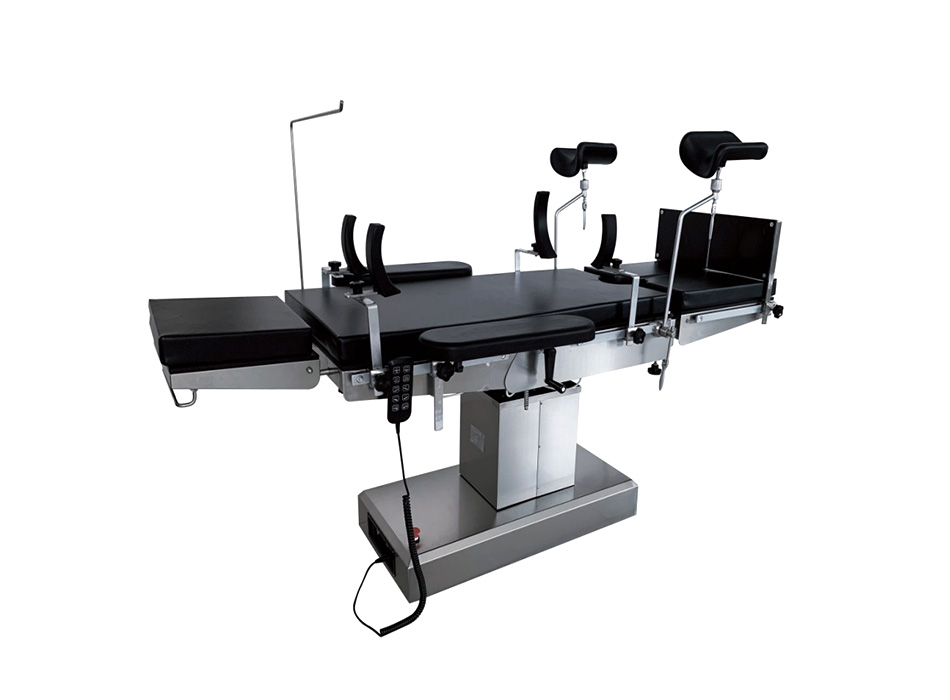
In an electro-hydraulic table, an electric motor drives the hydraulic pump. Control is via a pendant controller, wireless remote, or touchscreen panel. The electric motor provides faster repositioning, allows single-person operation without physical pumping effort, and enables programmable position memory (storing up to 10–20 preset surgical positions on advanced models). The tradeoff is dependence on power supply and more complex servicing requirements.
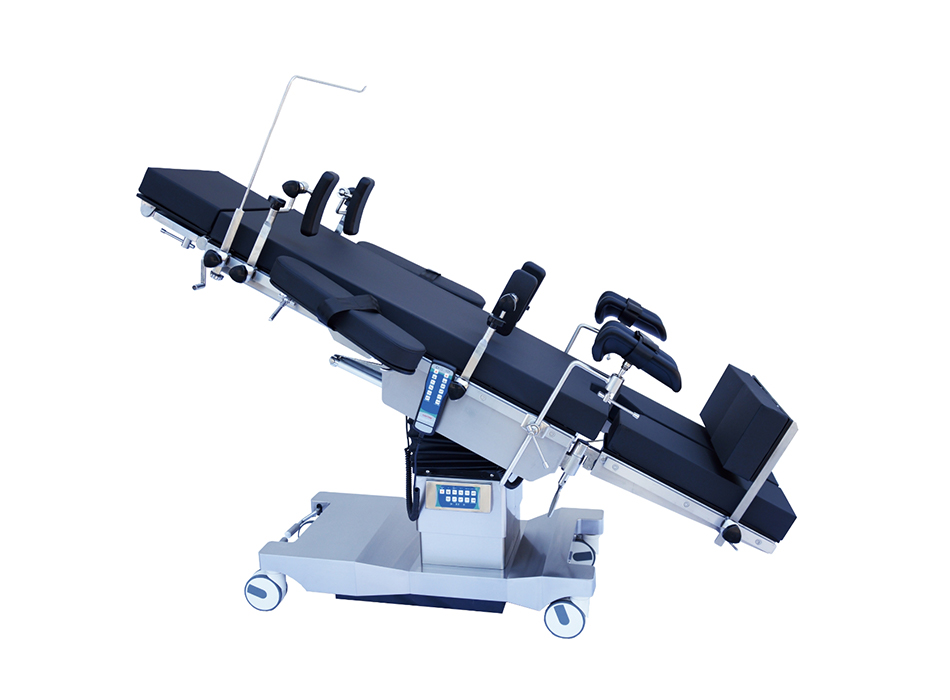
Hydraulic lock is inherently self-reinforcing under load — the greater the load attempting to move the table, the higher the trapped fluid pressure resists that force. This characteristic makes hydraulic tables particularly stable during procedures requiring extreme Trendelenburg positions or one-sided tilting, where the patient's full weight becomes an asymmetric lateral force. Well-designed hydraulic operating tables maintain position lock under lateral loads exceeding 500 Nm of torque without drift.
Understanding the technical specifications of operating tables prevents costly procurement mistakes. The following parameters directly affect clinical capability and patient safety.
| Specification | Typical Range | Clinical Significance |
|---|---|---|
| Maximum patient weight capacity | 250–500 kg (550–1,100 lbs) | Bariatric surgery access; standard is 250 kg, bariatric tables 450–500 kg |
| Table height range | 580–1,050 mm (23–41 inches) | Surgeon ergonomics; low position aids patient transfer; high position for laparoscopy |
| Trendelenburg / reverse Trendelenburg | ±30° to ±40° | Gynecology, urology, laparoscopy; steep Trendelenburg requires ±40° minimum |
| Lateral tilt | ±20° to ±30° | Kidney, thoracic, and lateral access procedures |
| Table length (with extensions) | 1,800–2,200 mm | Tall patient accommodation; leg section extension for orthopedic procedures |
| Table width | 500–560 mm standard; up to 700 mm bariatric | Patient comfort; access width for surgical team; lateral rail attachment |
| Radiolucency | Full or partial (carbon fiber sections) | Intraoperative fluoroscopy and C-arm access; essential for orthopedic and vascular surgery |
| Tabletop sections | 3–5 independently adjustable sections | Flexion/extension of back, legs, and head for multi-specialty positioning |
A standard hydraulic operating table rated at 250 kg (550 lbs) covers the majority of patients in most global markets. However, with obesity rates exceeding 40% of adults in some populations, facilities without bariatric-capable tables face patient refusal — a significant liability and access-to-care issue. Bariatric hydraulic tables rated for 450–500 kg feature wider tabletops (up to 700 mm), reinforced hydraulic cylinders, and wider-stance column bases to prevent instability under extreme lateral loads during positioning.
No single operating table optimally serves every surgical specialty. Understanding the key design differences between table types prevents the costly mistake of purchasing a general-purpose table that cannot accommodate the facility's primary procedure mix.
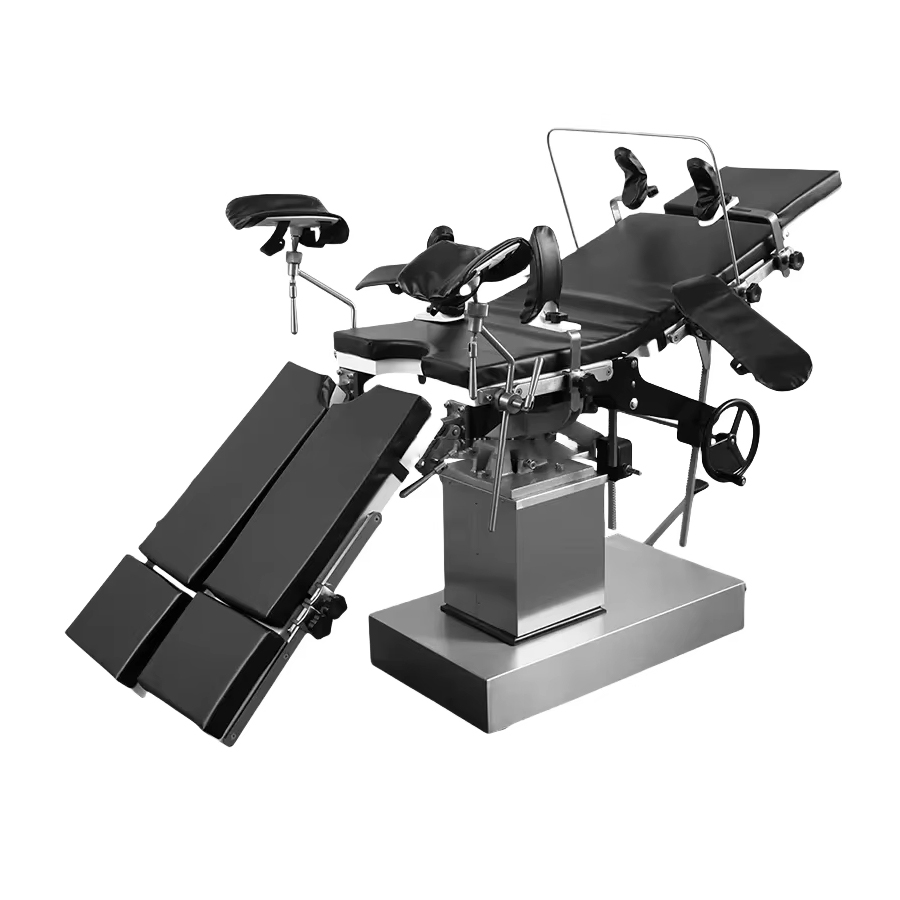
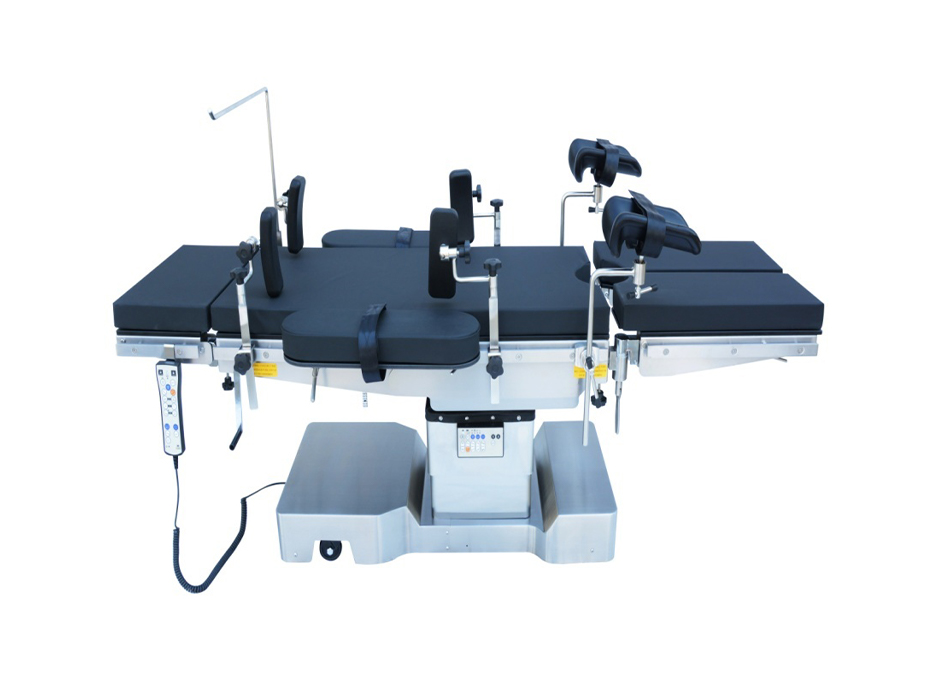
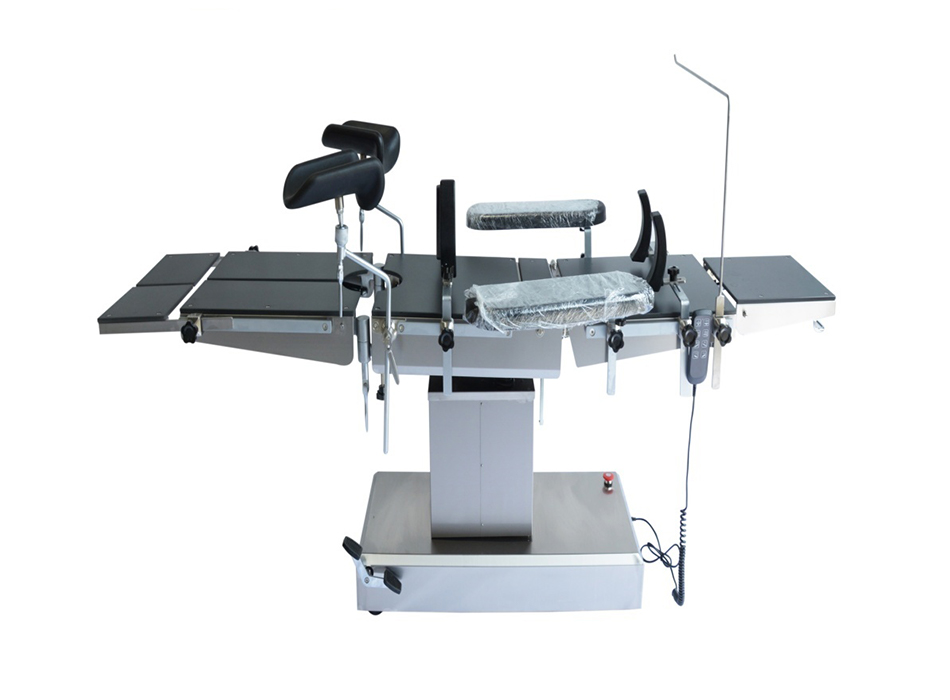
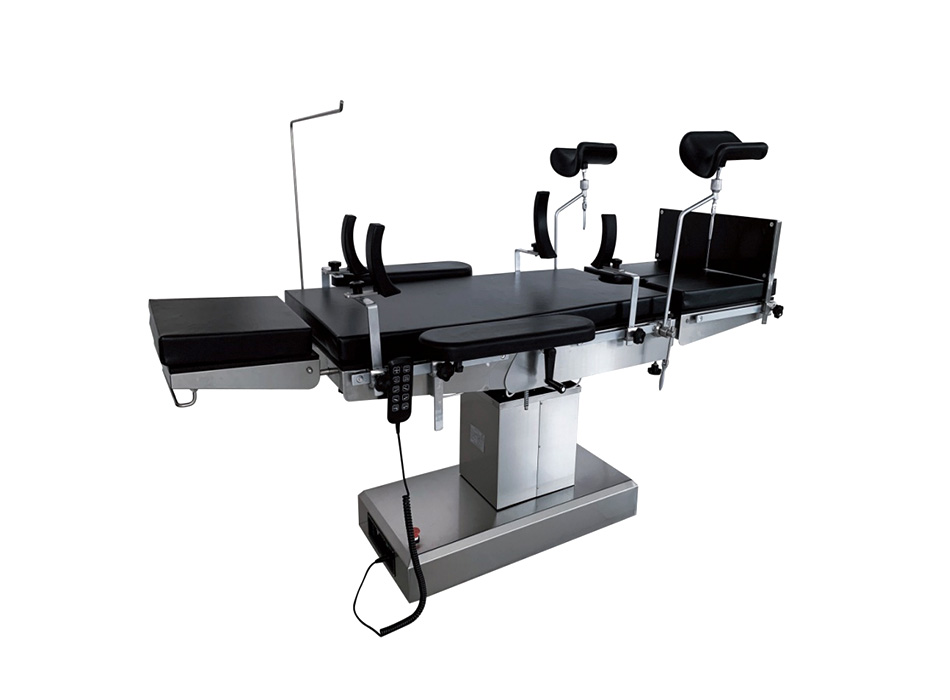
General surgery hydraulic tables are designed for broad versatility — open abdominal, laparoscopic, thoracic, and basic orthopedic procedures. They typically feature a 5-section tabletop (head, upper back, lower back/kidney bridge, leg, foot), full Trendelenburg and lateral tilt capability, and a rail system for mounting retractors, arm boards, and IV poles. The kidney bridge — a rise in the lower back section that hyperextends the lumbar region — is standard on general tables used for retroperitoneal access.
Orthopedic fracture tables feature a perineal post and traction attachments for hip and femur fracture reduction under fluoroscopic guidance. The leg sections are independently removable, and the table provides traction capability of up to 150 kg of tensile force on the fracture table boot. Full radiolucency of the leg and hip region is essential — carbon fiber leg sections and a clear column window for C-arm positioning are standard requirements for trauma orthopedics.
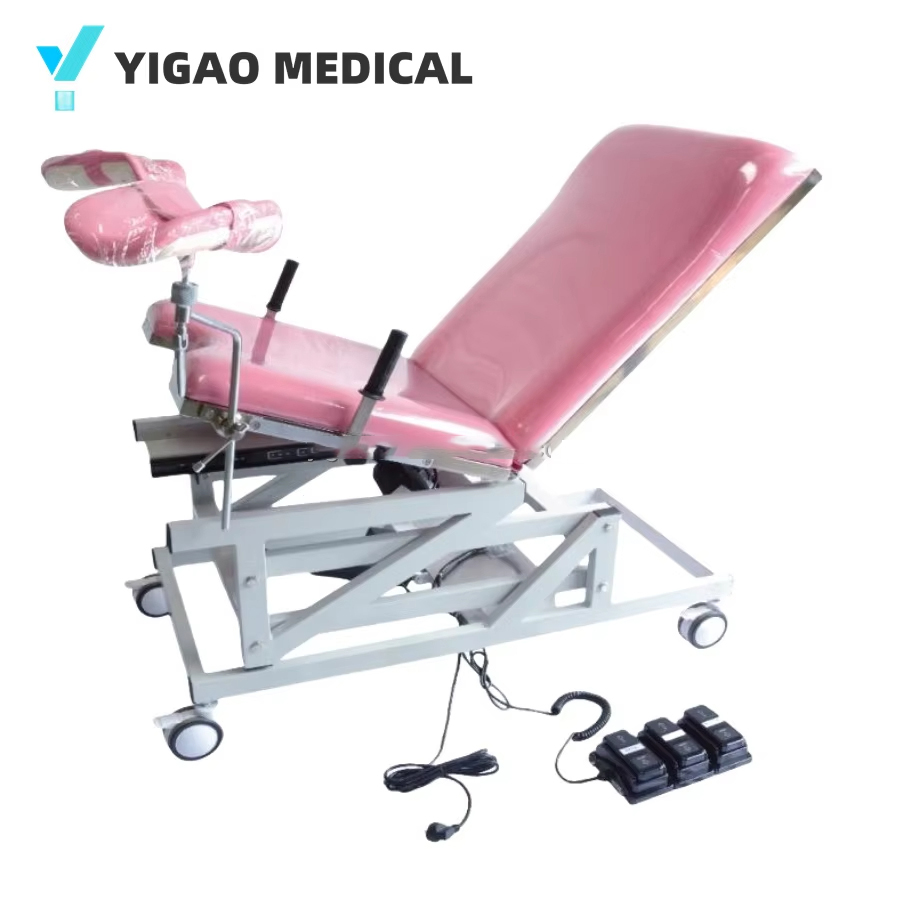
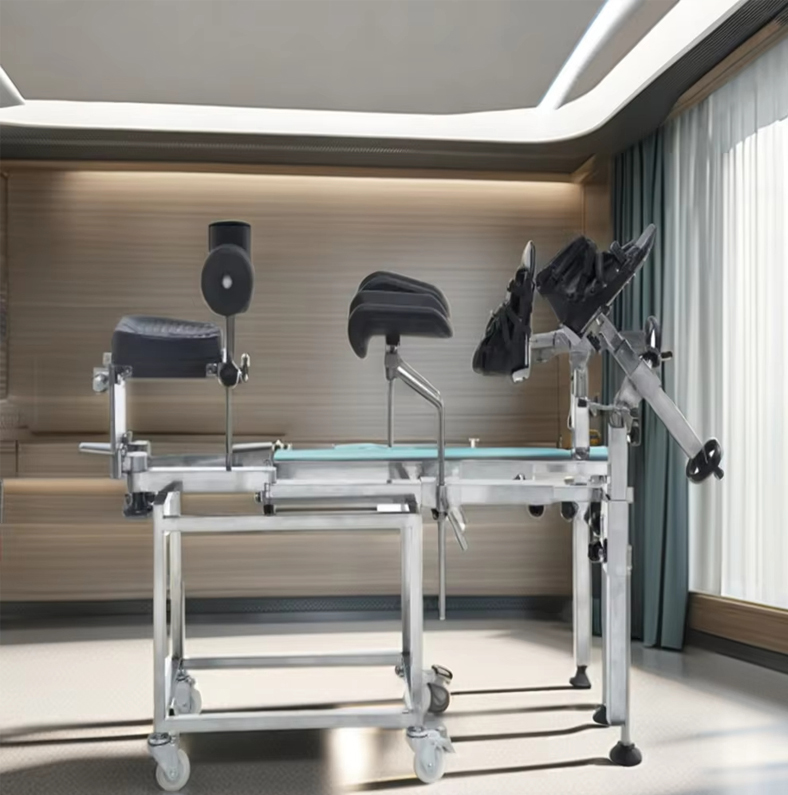
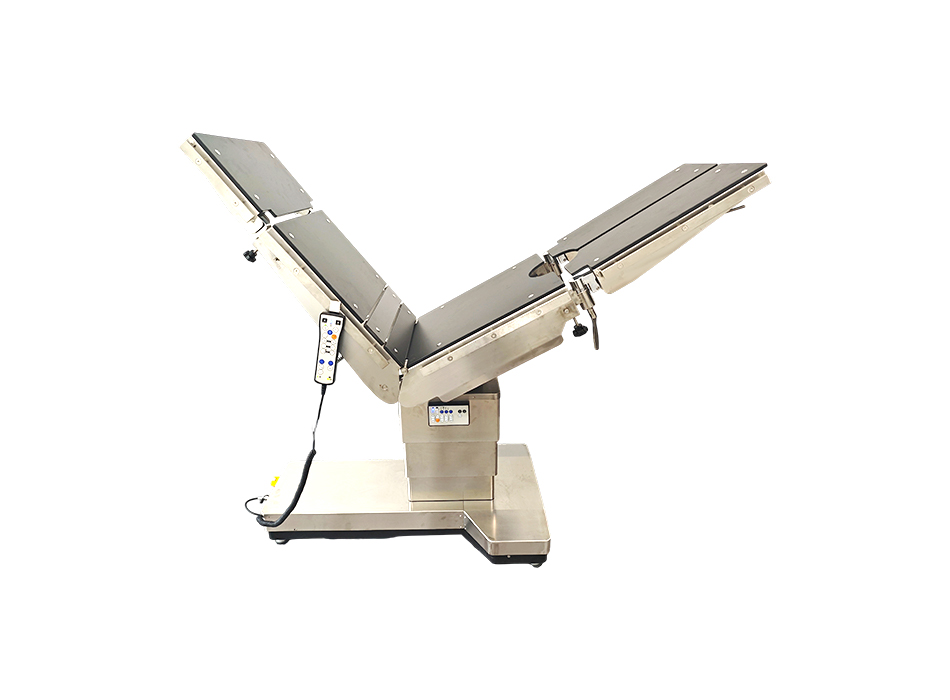
Tables designed for gynecological procedures require full drop of the leg sections and integrated stirrup or leg holder attachment points on the side rails. Hydraulic leg section lowering to 90° below table level or greater provides the lithotomy and dorsal lithotomy positions required for cystoscopy, hysteroscopy, and vaginal surgery. Electric-hydraulic drive is preferred for these tables because the speed of leg section adjustment and precise fine-positioning is difficult to achieve with manual foot pumping.
Spine surgery requires both prone and supine positioning with exceptional table stability — vibration or drift during spinal instrumentation is unacceptable. Neurosurgery tables feature Wilson frames, Jackson frames, or integrated radiolucent spinal frames that mount to the table column rather than the tabletop sections. The table must provide full fluoroscopic clearance for the entire spine from occiput to sacrum without column interference — a design requirement that forces most spine table manufacturers to use a lateral cantilever column design rather than a central post.
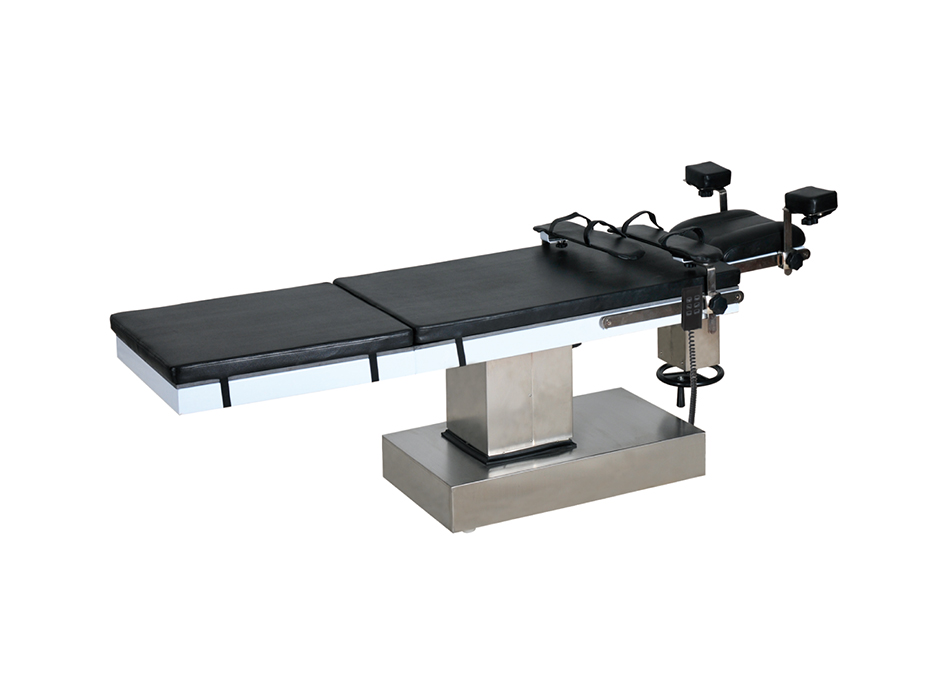
Ophthalmic and ENT procedures require precise head positioning and the ability to reverse Trendelenburg to reduce intraocular and intracranial pressure. These tables are typically narrower (480–500 mm) to allow surgeon access on both sides, and feature fine-adjustment headrests with three-point fixation for skull pins. The overall movement range is more limited than general surgery tables, but the precision of individual small movements must be greater.
The choice between a fixed-section tabletop and a modular interchangeable system is one of the most consequential decisions in operating table procurement.
Fixed tables have permanently attached sections that articulate around hinges built into the table frame. They are simpler, typically less expensive, and highly reliable because there are fewer mechanical interfaces. Standard fixed tables range from $8,000 to $35,000 USD depending on the actuation type, features, and manufacturer. The limitation is that the table cannot be configured for fundamentally different procedural requirements — a fixed general surgery table cannot be reconfigured into an orthopedic fracture table.
Modular systems use a universal column and base with interchangeable tabletop sections that attach via a standardized interface (typically a Swiss-norm or manufacturer-specific dovetail rail). A single column base can accept a standard flat top for general surgery, a carbon fiber radiolucent top for orthopedics, a narrowed neurology top for spine surgery, or specialized gynecology sections. This flexibility reduces total capital expenditure for multi-specialty facilities and simplifies servicing — a damaged top section can be swapped in minutes without taking the entire table out of service.
Modular systems are significantly more expensive — a complete modular system with three interchangeable tabletop configurations typically costs $45,000–$120,000 for the full accessory package. However, the per-procedure versatility often justifies the investment in facilities performing more than 2,000 cases per year across multiple specialties.
The number of achievable surgical positions directly determines which procedures the table can support. Below are the standard positions and the hydraulic table capabilities required for each:
| Surgical Position | Required Table Movement | Typical Procedure |
|---|---|---|
| Supine (flat) | Base position; height adjustment only | General abdominal, cardiac, vascular |
| Trendelenburg | Head-down tilt, ±30–40° | Laparoscopic pelvic, gynecology, bladder |
| Reverse Trendelenburg | Head-up tilt, ±30–40° | Upper GI laparoscopy, thyroid, ophthalmic |
| Lateral decubitus | Lateral tilt ±20–30°; kidney bridge elevation | Nephrectomy, thoracotomy, hip arthroplasty |
| Lithotomy | Leg section drop; stirrup attachment to rails | Cystoscopy, hysterectomy, colorectal |
| Prone | Patient positioned manually; table provides lumbar flex support | Spine surgery, posterior cranial, anorectal |
| Beach chair (sitting) | Back section raise to 60–80°; leg section lower | Shoulder arthroscopy, cervical spine (anterior) |
| Jackknife (Kraske) | Hip at break point; head and legs lowered | Rectal, pilonidal, coccyx procedures |
The base table is only one component of a complete surgical positioning system. Accessories extend capability and directly affect procedural safety. Incompatible accessories between table brands are one of the most common procurement mistakes — always verify accessory compatibility before purchasing.
Hydraulic operating tables are Class IIa or Class II medical devices (depending on regulatory jurisdiction) and must meet specific safety standards to be legally sold and used in healthcare facilities.
Always request documentation of current regulatory compliance from suppliers — particularly for tables manufactured in regions where market surveillance is limited. Counterfeit CE marks and falsified test reports exist in the medical equipment market. Verification through the FDA 510(k) database (publicly searchable) or the EU EUDAMED database provides independent confirmation of legitimate regulatory clearance.
A hydraulic operating table represents a capital investment with a service life of 15–25 years when properly maintained. Total cost of ownership over that period significantly exceeds the purchase price and must be factored into procurement decisions.
Manufacturer service contracts for hydraulic operating tables typically cost 3–8% of purchase price annually. For a $40,000 table, this represents $1,200–$3,200 per year. Third-party biomedical engineering service is available from independent ISOs (Independent Service Organizations) typically at 20–40% lower cost than manufacturer contracts, provided parts availability is confirmed — some manufacturers restrict parts sales to authorized service providers as a commercial strategy. Always verify parts availability and independent service options before purchase.
| Criterion | Manual Hydraulic | Electro-Hydraulic | Electric (Screw-Drive) |
|---|---|---|---|
| Power dependency | None | Required for power; manual backup sometimes available | Required; no manual backup |
| Position lock stability | Excellent (self-locking hydraulic) | Excellent | Good (depends on motor brake quality) |
| Repositioning speed | Moderate (pump effort required) | Fast | Fast |
| Purchase cost | Lowest ($8,000–$20,000) | Medium–High ($25,000–$80,000) | High ($30,000–$100,000+) |
| Maintenance complexity | Low | Medium | Medium–High (electronic components) |
| Programmable positions | No | Yes (most models) | Yes |
| Best suited for | Resource-limited settings; outpatient surgery | Multi-specialty hospitals; high-volume OR | Academic centers; robotic surgery integration |
Use the following checklist when evaluating and selecting a hydraulic operating table to ensure all critical requirements are addressed before purchase commitment:
If you are interested in our products, please consult us
Copyright © 2026 Jiangsu Yigao Medical Equipment Technology Co., Ltd.

Custom Electric Medical Bed Manufacturers
The information provided on this website is intended for use only in countries and jurisdictions outside of the People's Republic of China.