Welcome to Jiangsu Yigao Medical


 ENG
ENG

 English
 Español
Welcome to Jiangsu Yigao Medical

You walk into Operating Room 4, position the surgical light over the sterile field, and within a minute the light head has drifted toward the door. The surgeon calls it drifting; biomed calls it a friction brake failure. In many cases, you can fix surgical light drift in under an hour with basic hand tools, but only if you correctly identify which joint or tension mechanism is at fault.
The short version: most drift problems come from a loose friction brake, a fatigued spring, or worn fasteners. If you tighten the right components and verify the balance through the full range of motion, the light will hold its position reliably. Do not ignore the issue, because a drifting surgical light can misdirect illumination and create shadowing exactly when the surgical team needs consistent exposure.
Every surgical light has a set of articulated joints, typically a ceiling mount, a horizontal arm, a vertical post, and a yoke that holds the light head. Each joint uses either a friction brake, a lockable gas spring, or a counterbalance mechanism. Drift occurs when the friction surfaces no longer generate enough resistance to counter the weight of the light head. The most common causes are a loose brake knob or tension screw, worn brake pads or washers, a broken wave spring, or a gas spring that has lost pressure. Rather than replacing the whole light, you usually need to restore the clamping force at one or two joints.
In practical terms, a light that drifts only at certain angles often has an elliptical or nonuniform wear pattern on the brake disc. A light that drifts at every angle usually points to gas spring failure or a badly stretched counterbalance spring. The repair is different in each case, so do not skip the diagnosis step. If you are not sure which joint is failing, review the key specifications of a surgical shadowless lamp to understand which components carry the load. Then move the arm through its full envelope and listen for clicking or feel for roughness, because these clues tell you which bearing or brake is worn.
Before you pick up a wrench, isolate the direction of the drift. This saves time and prevents you from over-tightening a joint that is not the problem.
If the light head swings left or right around the vertical axis, the horizontal rotation joint is the issue. A loose snubbing pin or a nylon brake washer that has worn down will allow the light to rotate after you let go. Hold the arm firmly, tighten the brake screw or replace the washer, then test the rotation.
If the light head slowly nods downward or tilts upward, check the yoke pivot. Many models use a stack of wave washers compressed by a hex socket screw. Turn the screw clockwise in small increments to add friction. The correct setting is one where the light head stays in place but can still be repositioned with one hand.
If the whole suspension arm gradually falls, the counterbalance spring or gas spring is weak. Test by lifting the arm manually. If it rises easily but droops under its own weight, the gas spring needs replacement. On some models, you can adjust a threaded rod at the back of the arm to increase spring tension, but if the spring is visibly deformed, replace it rather than compensating.
Also, confirm that the vertical post is plumb. On post-mounted and ceiling-mounted lights, a tilt of two degrees or more can cause a slow sideways drift that looks like a brake problem. Use a torpedo level on the post before making any brake adjustments.
Now that you know which joint is moving, follow this sequence. It works for ceiling-mounted and mobile surgical lights.
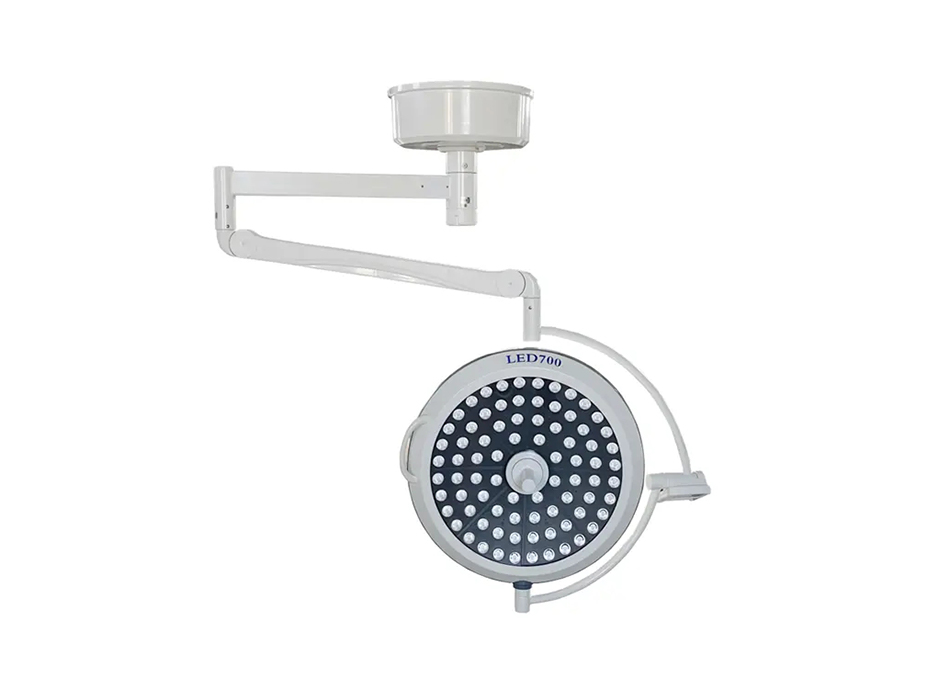 OEM/ODM YGLED700 Operating room LED shadowless lamp Factory, Manufacturers - JiaJiangsu Yigao Medical Equipment Technology Co., Ltd is China OEM/ODM YGLED700 Operating room LED shadowless lamp factory and manufacturer...View Product → is designed with a sealed friction brake and a marked tension scale, so the correct setting is easier to find than on older open-friction designs.
After fixing the drift, schedule a maintenance routine so the problem does not return. A quarterly check is reasonable for OR lights that are moved often. For lights that stay in one position, a semi-annual check is enough. The table below summarizes what to inspect and how often. It is a practical starting point, not a substitute for the manufacturer's manual.
| Checkpoint | Frequency | What to Look For |
|---|---|---|
| Ceiling mount and arm fasteners | Quarterly | Any play between the base plate and ceiling |
| Brake and tension adjustment | Quarterly | Drift at a 45-degree arm angle |
| Gas spring or counterbalance | Semi-annually | Droop or bounce when moved |
| Electrical cable and connectors | Annually | Frayed sheathing, loose terminals |
| Light head and yoke pivot | Annually | Uneven wear, rust, or cracks |
Also, keep a log of adjustments. If the same joint needs retightening every quarter, the brake washer or spring is likely reaching the end of its service life. At that point, a replacement light may be more cost-effective than repeated repairs. For smaller rooms or outpatient facilities, a mobile light can simplify the layout. The YGLED500 LED mobile surgical shadowless lamp gives the team control over positioning without relying on ceiling rails, which is helpful when drift is caused by a worn ceiling track. It also has a simpler vertical column, so the adjustment points are easier to access.
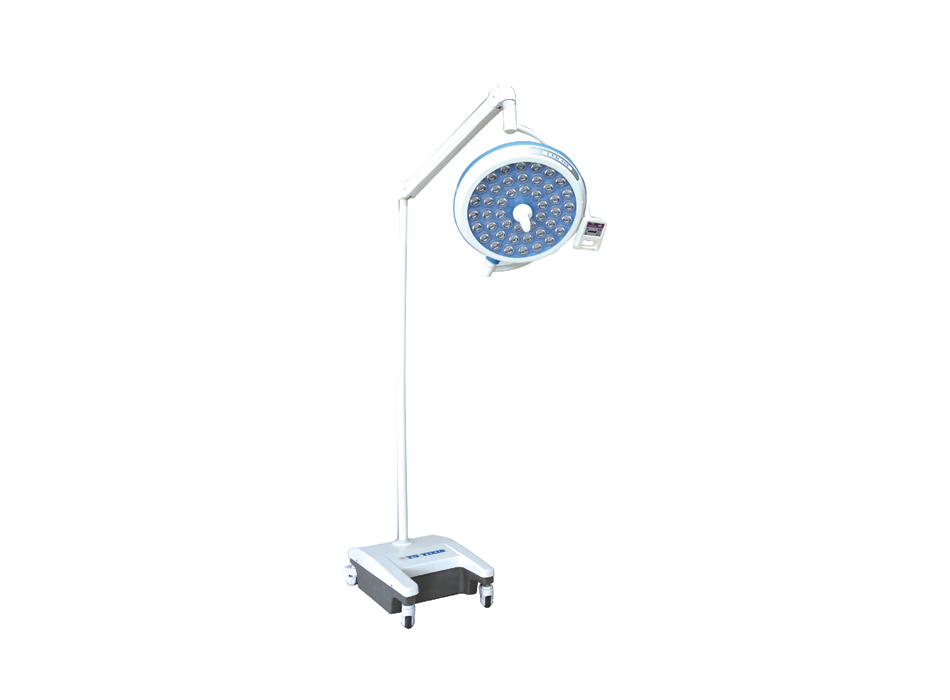 OEM/ODM YGLED500 LED Mobile Surgical Shadowless Lamp Factory, Manufacturers - JiJiangsu Yigao Medical Equipment Technology Co., Ltd is China OEM/ODM YGLED500 LED Mobile Surgical Shadowless Lamp factory and manufacture...View Product →
Fixing surgical light drift is a systematic process: diagnose the moving joint, restore the clamping or counterbalance force, and verify the result. Most repairs take less than an hour and cost only the price of a brake washer or spring. But safety controls every step. If you find cracks, loose ceiling anchors, or a gas spring that visibly leaks, stop and get professional help. Our technical support team can help you confirm whether a component is compatible with your surgical light, or talk through replacement options for older systems.
If you are interested in our products, please consult us
Copyright © 2026 Jiangsu Yigao Medical Equipment Technology Co., Ltd.

Custom Electric Medical Bed Manufacturers
The information provided on this website is intended for use only in countries and jurisdictions outside of the People's Republic of China.