Welcome to Jiangsu Yigao Medical


 ENG
ENG

 English
 Español
Welcome to Jiangsu Yigao Medical

Stand at the head of an operating table during a deep abdominal case. The surgeon leans in, a clamp enters the wound, and the anesthesiologist's monitor stands nearby. Yet the operative field remains evenly lit. No hard-edged shadow falls across the tissues. That is not an optical illusion; it is the result of deliberate design. Surgical lights are engineered so that no single light source is responsible for illuminating the site. Instead, they layer multiple beams from different angles, an effect called shadow dilution. The practical result: shadows still exist in a physical sense, but they become so faint and diffuse that they no longer obscure the surgeon's view.
Before explaining how surgical lights avoid shadows, it helps to recall why shadows appear at all. When a small, concentrated light source illuminates an object, the object blocks photons and leaves a dark region behind it. The more directional the source, the sharper the shadow. A bare downlight over a desk behaves this way. In surgery, the blocking objects are not just the patient's tissues but also the surgeon's hands, the scalpel handle, a retractor, or a suction tip. A single conventional lamp would turn every movement into a moving obstruction that fades parts of the field into darkness. That is why ordinary room lighting is never enough for fine dissection.
Shadowless surgical lights do not remove the obstacles; they make the obstacles less disruptive. The key is to send light to the target area from several directions at once. Each beam creates its own shadow, but the shadows land in different positions. Light from one angle fills the shadow cast by another angle. When dozens or even hundreds of beams overlap at the same focal point, the residual shadow becomes so shallow that it virtually disappears. This is known as shadow dilution. The more independent angles a lamp provides, the more effectively it cancels the effect of hands and instruments.
An alternative way to imagine it is to compare two flashlights side by side. Each one casts a distinct shadow on the wall, but if you shine many flashlights from a ring around the object, the dark zones become less defined and eventually merge into a uniform wash of light. Surgical lamps scale that idea up with precision optics. For a step-by-step technical walkthrough, see our detailed guide on the principle of shadowless lamps.
Manufacturers use two main optical architectures to produce shadow dilution: LED arrays and large-diameter reflectors. Both are valid, but they achieve the effect differently.
LED surgical lights use multiple LED chips arranged in a ring or grid, sometimes with individual lenses. Each LED emits a slightly different angle of light. The overlap of all those small beams creates a wide, uniform light field. Many modern LED heads also allow the operator to adjust color temperature and intensity. A compact yet powerful example is the YGLED700 operating room LED shadowless lamp, which uses a multi-LED array to keep the field bright while minimizing shadow edges.
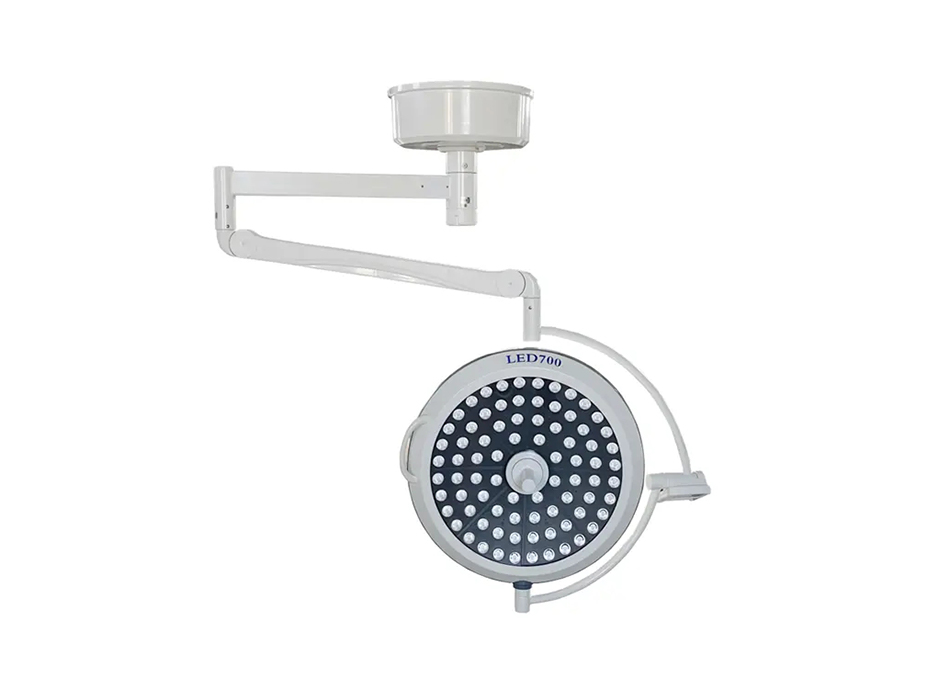 OEM/ODM YGLED700 Operating room LED shadowless lamp Factory, Manufacturers - JiaJiangsu Yigao Medical Equipment Technology Co., Ltd is China OEM/ODM YGLED700 Operating room LED shadowless lamp factory and manufacturer...View Product →
Reflector-based surgical lights take a different route. They use a deep, dome-shaped reflector to collect light from a central source and distribute it over the surgical site from a wide angular spread. The large reflecting surface creates the same overlapping effect as multiple bulbs, just through mirrors. These designs are often preferred when a softer, very uniform illumination profile is required. For example, the YGZF700 overall reflective shadowless lamp is a proven choice for surgeons who value the characteristically smooth field of a large reflector system.
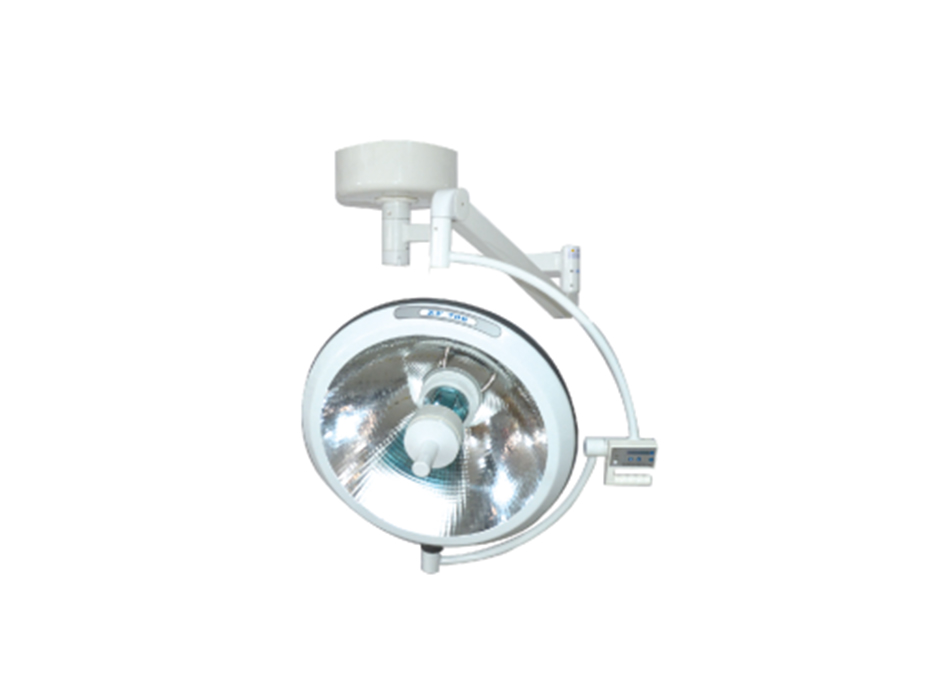 500/700 LED Movable Surgical Shadowless Lamp Factory, ManufacturersAs China LED 500 Movable Surgical Shadowless Lamp Factory and Manufacturers, Jiangsu Yigao Medical Equipment Technology provide OEM/ODM Y...View Product →
Shadow dilution is only one part of the story. When comparing surgical lights, several measurable parameters determine whether the shadow-free effect holds up in practice. The table below summarizes the key specifications and what they mean for surgical teams.
| Parameter | What It Affects | Typical Range |
|---|---|---|
| Central illuminance (lux) | Brightness and visibility of deep tissue | 40,000 to 160,000 lx depending on model |
| Light field diameter (mm) | Size of the area that remains evenly lit | 100 to 350 mm depending on head size |
| Depth of illumination (mm) | Ability to keep brightness consistent in deep cavities | 500 to 1,500 mm depending on reflector or LED design |
| Color rendering index (Ra) | How accurately tissue color appears | Ra 90 and above for surgical use |
| Color temperature (K) | Perceived whiteness and contrast | 3,500 to 5,000 K, adjustable on many LED models |
A high central illuminance is important, but without adequate depth of illumination and uniform light distribution, a lamp can still fail during a long procedure. Shadow dilution, therefore, should be evaluated together with these parameters rather than in isolation.
The clinical value of shadow dilution goes beyond convenience. A surgical site that remains evenly lit reduces the surgeon's need to adjust posture or reposition the lamp. This directly supports concentration during long operations. It also helps the whole operating room (OR) team: nurses see what the surgeon sees, instruments are easier to track, and the risk of accidental obstruction of the field decreases. When combined with a high color rendering index, shadow-diluted lighting lets surgeons distinguish tissue planes, bleeding points, and subtle color changes with more confidence.
The difference becomes especially clear in deep, narrow surgical fields such as spinal, cardiac, or neurosurgical procedures. In these cases, the cavity itself blocks part of the light path. A lamp with poor shadow dilution will create a dark zone at the bottom of the wound, forcing the surgeon to work partly by memory. A properly designed shadowless lamp keeps the floor of the cavity visible because light continues to arrive from angles that are not obstructed by the wound edges.
When you begin comparing surgical lights, focus on how each model produces and maintains its shadow dilution performance in real operating conditions. The following points are useful filters during a product evaluation.
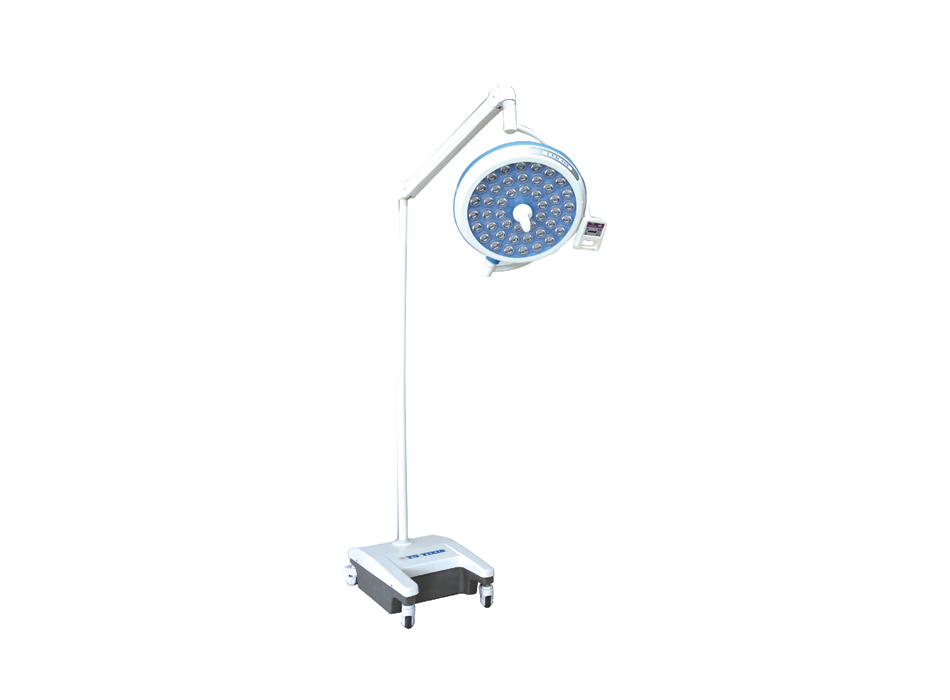 OEM/ODM YGLED500 LED Mobile Surgical Shadowless Lamp Factory, Manufacturers - JiJiangsu Yigao Medical Equipment Technology Co., Ltd is China OEM/ODM YGLED500 LED Mobile Surgical Shadowless Lamp factory and manufacture...View Product → avoids the cost of additional ceiling mounts while preserving shadow dilution performance.
If you are evaluating a new installation or need help comparing specifications, contact our team. A short conversation can often clarify which light source, mounting option, and performance level best matches your caseload and budget.
Shadowless surgical lights remain one of the quiet essentials of modern surgery. The principle behind them is simple: when you cannot avoid shadows, you can at least dilute them by combining many light angles into one coherent field. LED arrays and reflector domes do this in different ways, but both aim for the same outcome: a stable, uniform pool of light that lets the surgical team concentrate on the patient rather than on the lamp. Understanding how that effect works is the first step toward choosing a light that will perform reliably for years.
If you are interested in our products, please consult us
Copyright © 2026 Jiangsu Yigao Medical Equipment Technology Co., Ltd.

Custom Electric Medical Bed Manufacturers
The information provided on this website is intended for use only in countries and jurisdictions outside of the People's Republic of China.