Welcome to Jiangsu Yigao Medical


 ENG
ENG

 English
 Español
Welcome to Jiangsu Yigao Medical

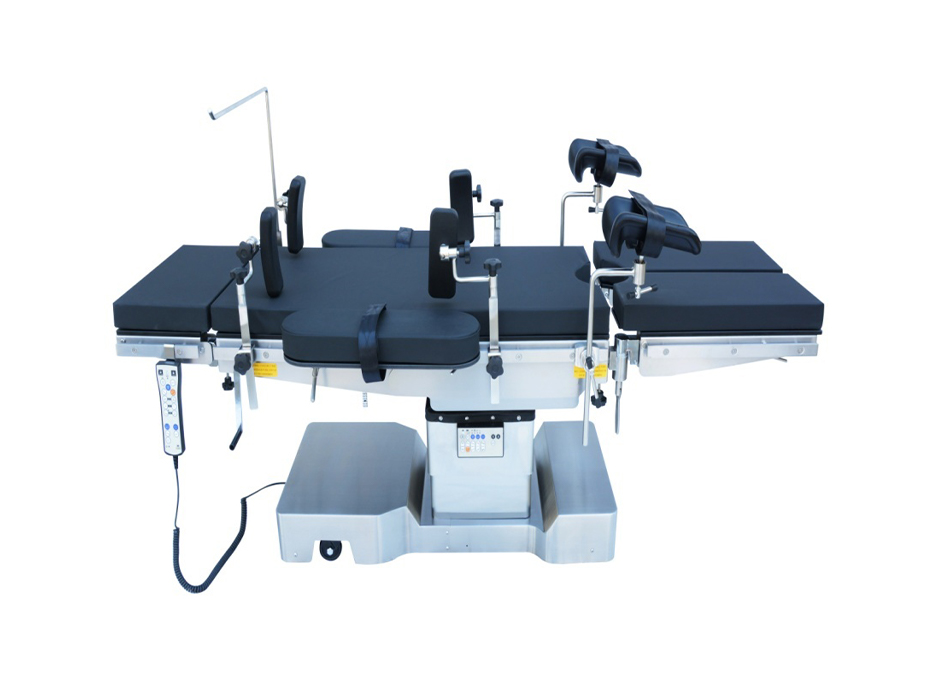
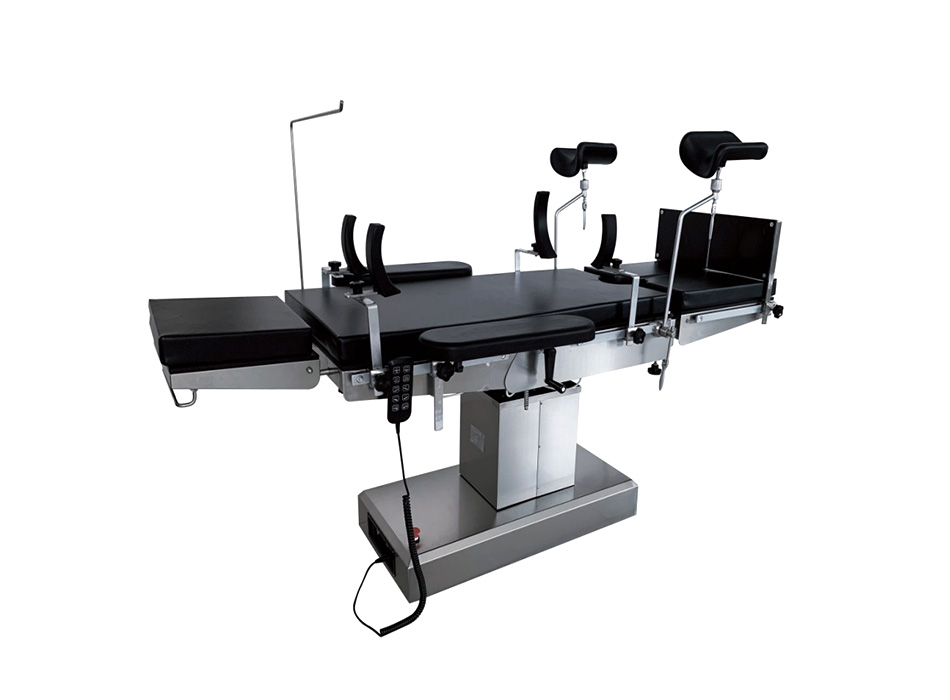
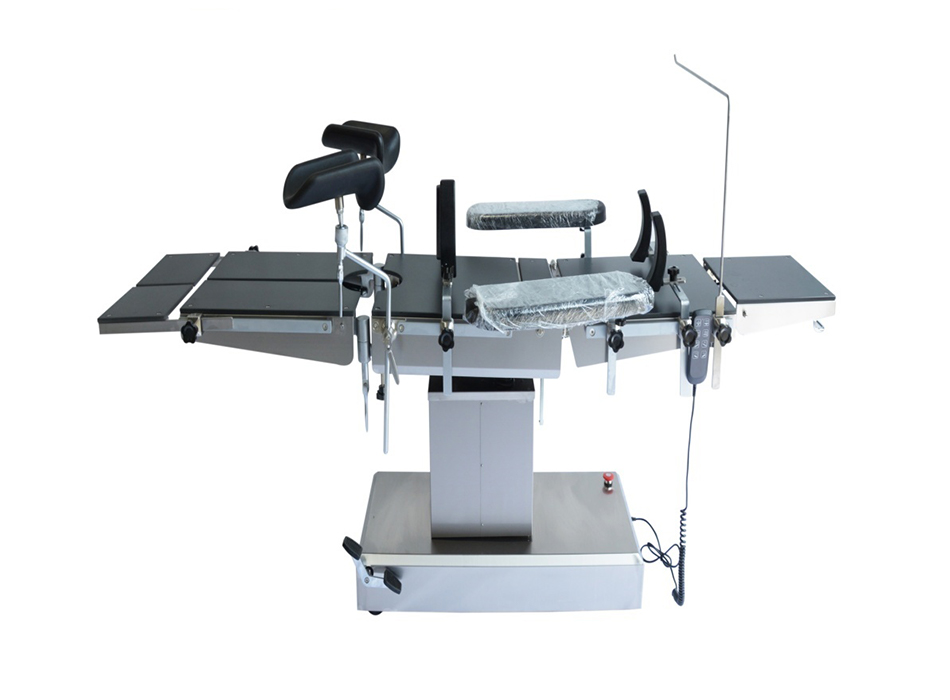
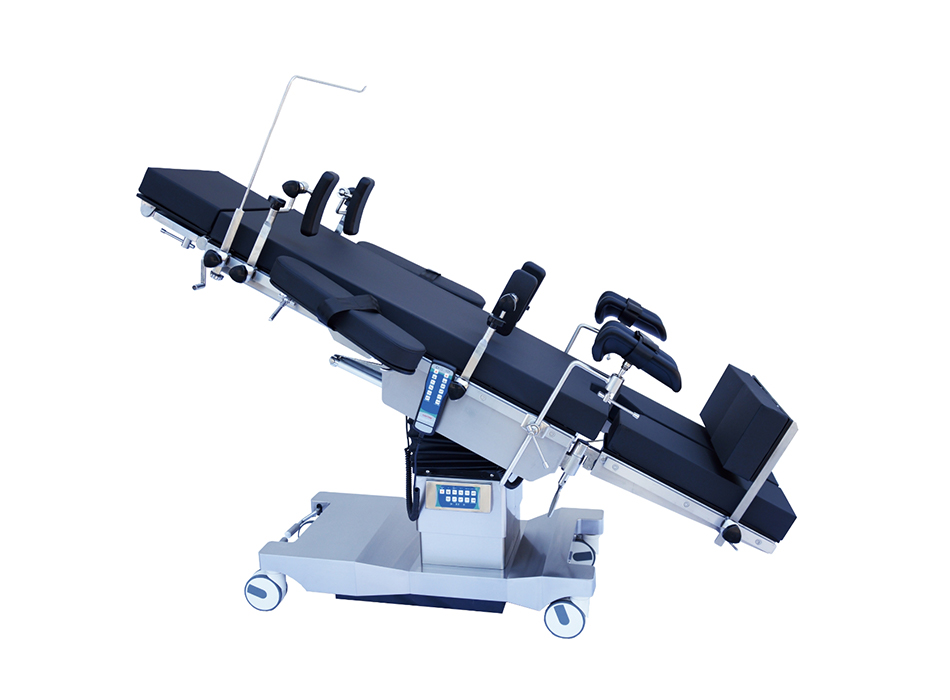
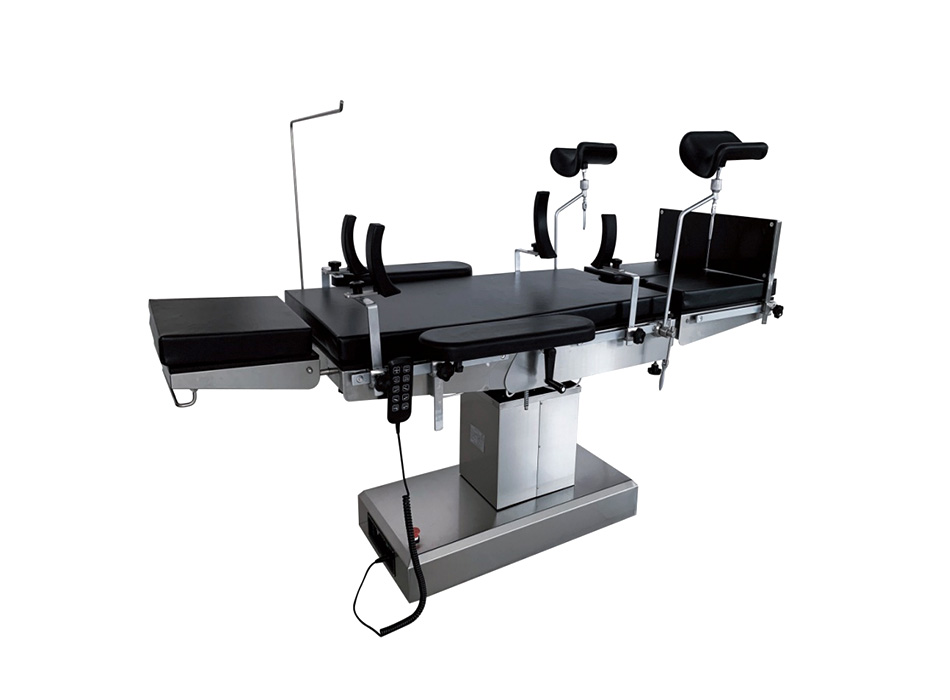
An operating table is a narrow, flat, motorised platform — typically 190–210 cm long and 50–60 cm wide — designed to position a patient precisely during surgery. It is mounted on a central column or multi-leg base, surfaced with firm, radiolucent padding, and equipped with multiple adjustable sections that allow the head, back, seat, and leg panels to tilt, flex, or detach independently. The table is almost always finished in stainless steel and muted grey or white upholstery, with a highly functional, undecorated appearance driven entirely by clinical necessity.
To someone entering an operating theatre for the first time, the operating table looks like a slim, high-tech examination bed positioned in the centre of the room under a large, multi-arm surgical light. Its surface sits roughly 75–100 cm above the floor at rest, but can be raised to 115 cm or lowered to 60 cm to suit the surgeon's height and the procedure being performed.
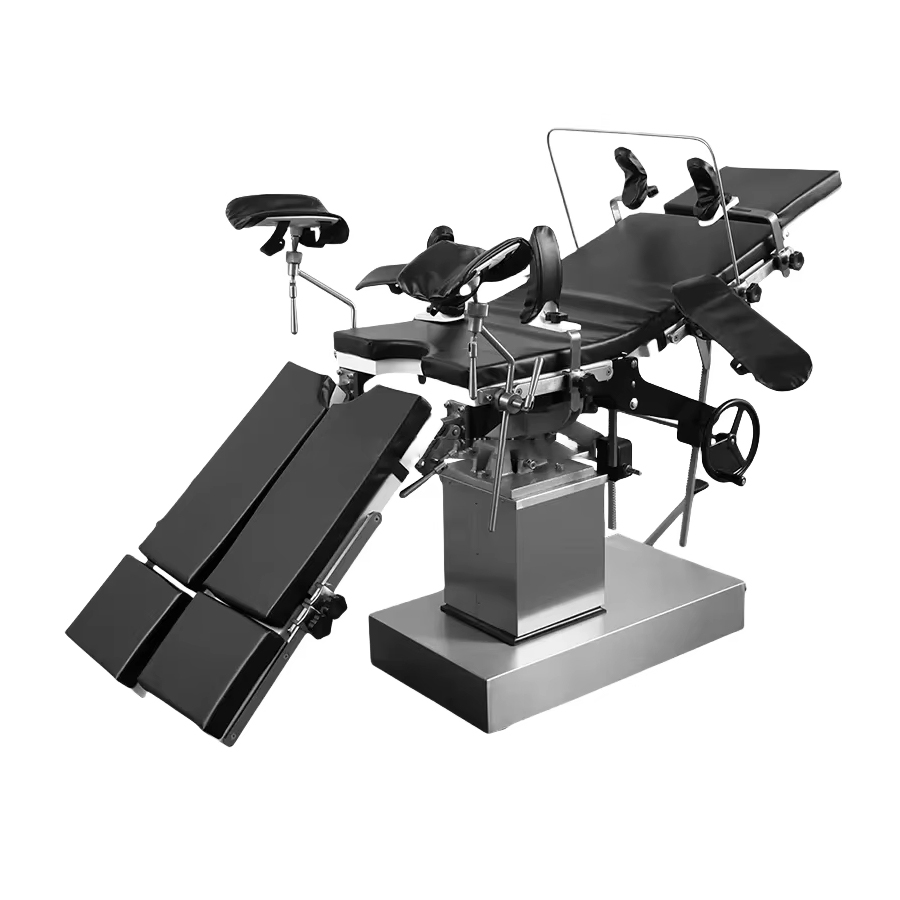
The top surface — called the tabletop — is segmented into three to five individual panels separated by visible seams. These panels can be adjusted independently or in combination. The padding is covered in fluid-resistant, antimicrobial vinyl or polyurethane fabric, typically in light grey, dark blue, or black. Underneath the tabletop, the column and base unit are constructed from brushed or polished stainless steel, giving the table a clean, clinical gleam under surgical lighting.
Along the sides of the table, rail systems run the full length of the tabletop. These rails accept a variety of attachments — armboards, leg holders, shoulder braces, and restraint straps — that clip or lock into place without tools. A handheld remote control or pendant, usually tethered by a cable or wireless, hangs from the side of the column and is used by the surgical team to adjust table position during the procedure.
Every operating table consists of several distinct structural elements, each with a recognisable appearance and function:
The base is a heavy, flat-profile unit that sits on the floor. It is either a fixed pedestal (floor-mounted or ceiling-suspended) or a mobile wheeled base. Mobile bases typically have four to six large, lockable castors — each 125–150 mm in diameter — visible at floor level. The central column rises vertically from the base and houses the hydraulic or electromechanical actuators that raise and lower the table height. The column is typically 30–50 cm wide and tapers slightly toward the tabletop connection point.
The tabletop is the most visually prominent part of the operating table. It is divided into sections that correspond to anatomical regions of the body:
Running along both long edges of the tabletop are stainless steel side rails with a standardised slotted or stepped profile. These are the most visually distinctive feature of a modern operating table — they appear as a row of evenly spaced rectangular notches or a continuous T-slot channel, into which accessories click with a quarter-turn or sliding mechanism. They give the table its characteristic industrial appearance even when no accessories are attached.
Attached to the side of the column or hanging from the table frame is a handheld control unit — a rectangular device approximately the size of a television remote control, typically in grey or black plastic. It carries clearly labelled buttons or a touchscreen for each axis of movement: height, tilt, lateral tilt (roll), back angle, leg angle, and table slide. Some high-end models feature a colour touchscreen display showing a graphical representation of the current table position.
Operating table dimensions are standardised within a recognised range to accommodate adult patients of varying sizes while allowing surgical team access from all sides. The table below summarises typical dimensions across common table categories.
| Parameter | General Surgery Table | Orthopaedic Table | Paediatric Table |
|---|---|---|---|
| Tabletop length | 190–210 cm | 195–220 cm | 120–160 cm |
| Tabletop width | 50–57 cm | 52–60 cm | 40–50 cm |
| Height range (min–max) | 62–102 cm | 60–115 cm | 55–95 cm |
| Safe working load | 150–250 kg | 180–360 kg | 80–120 kg |
| Table own weight | 200–350 kg | 300–500 kg | 100–180 kg |
| Trendelenburg tilt range | ±30° | ±25° | ±25° |
| Lateral tilt (roll) range | ±20° | ±20° | ±15° |
Not all operating tables look the same. Different surgical specialties require different configurations, and each type has a distinctive visual profile.
The most common type — a multipurpose table used across abdominal, thoracic, urological, and gynaecological procedures. It has a fully segmented top with a central break point, side rails running the full length, and a mobile column base on castors. The tabletop surface appears relatively flat and uncluttered when no accessories are attached. This is the operating table most people visualise when they think of surgery.
Immediately recognisable by its additional mechanical extensions — perineal posts, traction boots, and countertraction devices that project outward from the frame. Orthopaedic tables often have a distinctly open, skeletal appearance at the lower end, with large sections of the tabletop absent or folded away to allow fluoroscopy (X-ray imaging) of the hip, femur, or tibia intraoperatively. The C-arm of a fluoroscope must be able to swing freely beneath and around the table.
Used for spinal and brain surgery, neurosurgical tables are visually distinguished by a large, rigid head frame — either a horseshoe-shaped foam support or a rigid carbon fibre pin fixation frame (such as a Mayfield clamp) mounted at the head end. The table itself tends to have a more streamlined body section, and the head section is often replaced entirely by the skull fixation system. The table may also have pronounced lateral supports along the torso to stabilise the prone position.
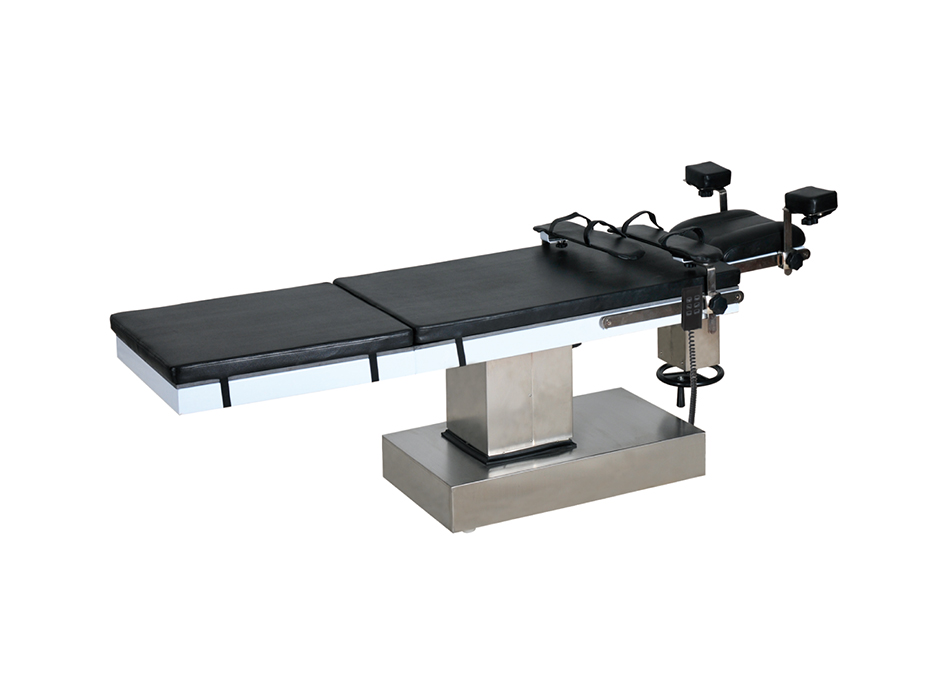
Smaller and narrower than a general surgery table, with particular attention to fine head position adjustment. The head section is typically fitted with a concave or recessed headrest. These tables often appear more compact and have fewer visible accessories than their general or orthopaedic counterparts.
Designed for patients with a body weight above 200 kg, bariatric tables are visually wider — typically 60–76 cm wide versus the standard 50–57 cm — with a heavier base unit and reinforced column. The safe working load is rated up to 450 kg on specialist models. Side extensions that clip onto the standard rails can increase the tabletop width to 90 cm or more, creating a visually broader profile.
The top surface of an operating table is not hard metal. Each section is covered with a firm foam or gel mattress pad, typically 50–80 mm thick, that provides both patient comfort and pressure redistribution. The padding must be firm enough to maintain a predictable patient position under surgical forces, yet compliant enough to prevent pressure injuries during procedures that can last 6–10 hours.
The outer cover of the pad is made from:
Colour-wise, pad covers are most commonly dark grey, charcoal, or navy blue in modern theatres — these colours show fluid saturation more clearly than light colours, giving the surgical team an immediate visual cue for fluid management. Older tables used white or cream coverings, which are now considered less practical in a clinical context.
The appearance of an operating table changes dramatically once it is configured for a specific procedure. Accessories alter the visual profile significantly and are part of what makes a prepared operating table look very different from an empty one.
| Accessory | Appearance | Purpose |
|---|---|---|
| Armboard | Padded flat panel extending sideways from the rail | Support the patient's arm during IV access or arm surgery |
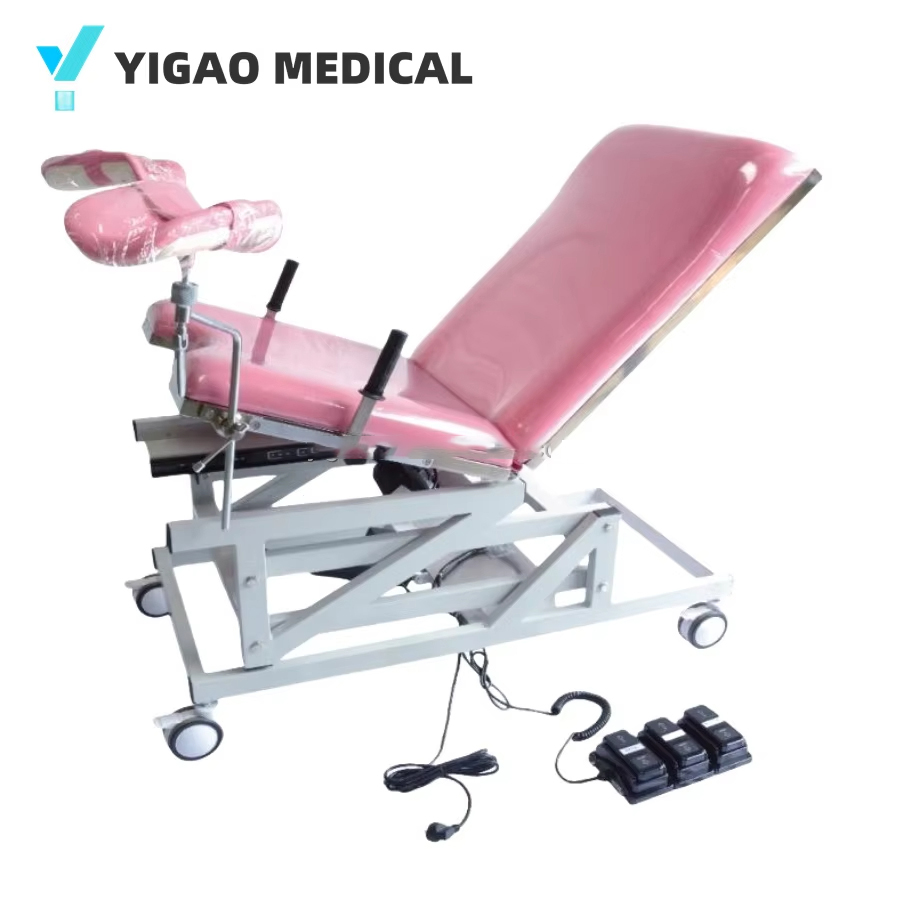
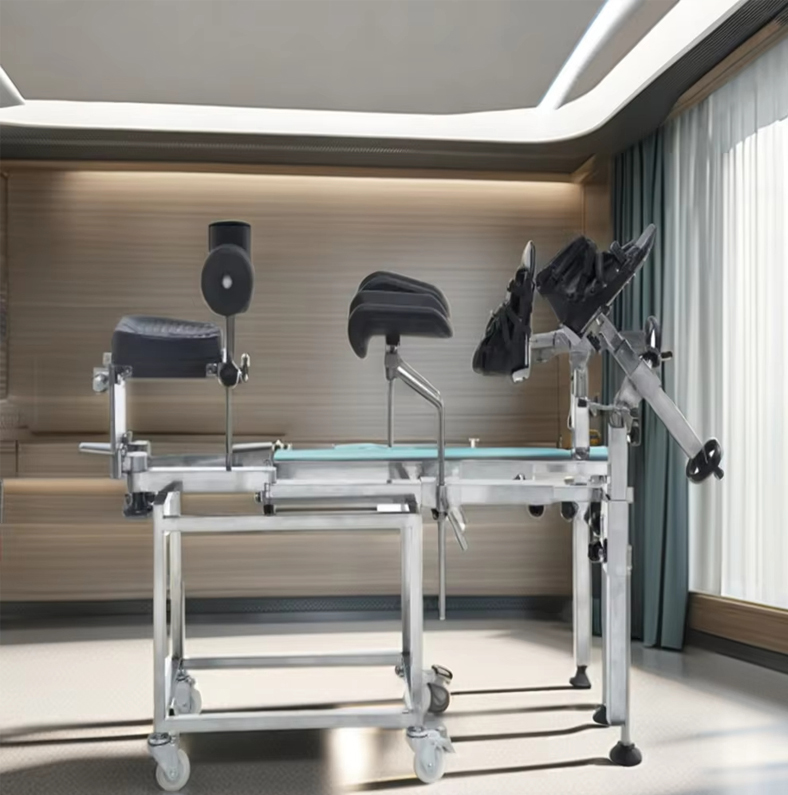
| Lithotomy leg holders (stirrups) | Metal poles with boot-shaped padded supports at the foot end | Elevate and abduct legs for perineal, gynaecological, or urological access |
| Shoulder braces / body supports | Padded curved brackets mounted at shoulder height on the rail | Prevent the patient sliding when the table is steeply tilted |
| Anaesthesia screen | Horizontal bar across the table at chest height with a drape over it | Create a sterile field barrier between the anaesthetist and the surgical site |
| Lumbar bridge / kidney rest | Raised padded arch positioned under the flank region | Elevate the flank to open the space between the ribs and pelvis for renal access |
| Mayfield head clamp | Three-pin metal skull-fixation frame replacing the head panel | Rigid fixation of the skull for neurosurgical precision work |
| Restraint straps | Velcro or buckle straps across the thighs and chest | Prevent involuntary patient movement during surgery under anaesthesia |
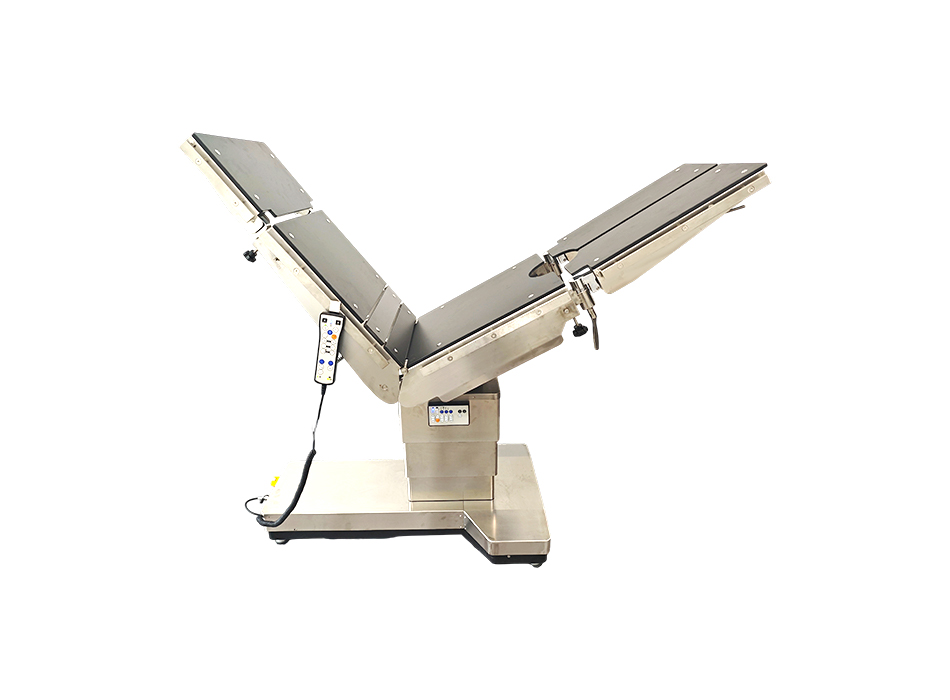
One of the most striking things about a modern operating table — especially for anyone unfamiliar with operating theatres — is how dramatically it can change shape. The table is not static; it is a precision positioning device. Understanding the named positions helps explain why the table looks the way it does for a given procedure.
The operating table's base unit determines both its appearance and its flexibility in the theatre environment. There are three principal configurations:
The most common configuration worldwide. The entire table — column, actuators, and top — moves on castors and can be repositioned within the theatre. The base is visually distinctive: a flat, low-profile sled or cruciform foot with four to six large castors. A mobile general surgery table with its column and base typically weighs 250–350 kg, making the castors and braking mechanisms robust and visible components.
Bolted permanently to the theatre floor, these tables have a much cleaner visual base — a single narrow column emerging from the floor with no visible wheels or base plate. This creates an open, uncluttered floor space that makes theatre cleaning easier and reduces trip hazards. The tabletop section is often exchangeable, sliding off the column on a transport trolley and replaced between cases. Floor-mounted systems are common in high-throughput operating suites and hybrid operating rooms.
The most striking-looking configuration: the table is supported from a rail system in the ceiling, with no floor base at all. The result is a tabletop that appears to float, with the entire floor beneath it completely clear. These are found primarily in high-end hybrid operating rooms combining surgery with intraoperative MRI or CT imaging, where floor-level equipment must be completely absent from the scan field.
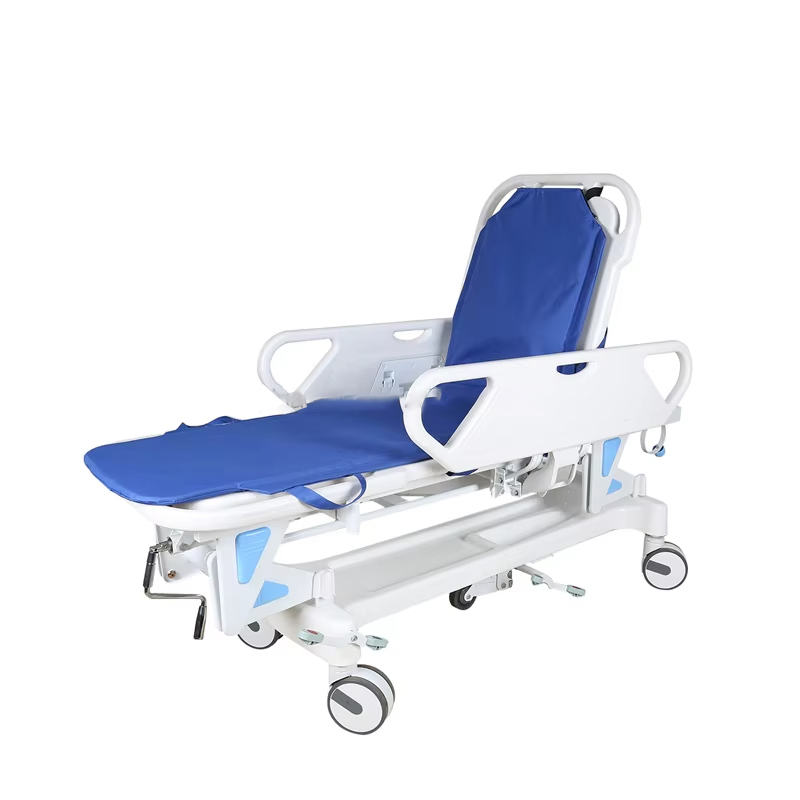
People sometimes confuse operating tables with hospital beds or examination tables. The differences are significant and visually obvious once pointed out:
| Feature | Operating Table | Hospital Bed | Examination Table |
|---|---|---|---|
| Width | 50–60 cm (narrow) | 90–100 cm (wide) | 55–65 cm |
| Side rails | Accessory attachment rails (no patient fall protection) | Folding safety rails to prevent patient falls | Typically none |
| Padding thickness | 50–80 mm (firm) | 100–150 mm (soft mattress) | 30–50 mm (firm) |
| Segmentation | 3–5 independent articulating panels | 2–3 sections (head and knee elevation) | 1–2 sections |
| Radiolucency | Full tabletop radiolucent | Partial or none | Varies |
| Maximum tilt | ±30° longitudinal, ±20° lateral | Head up to 75°, no lateral tilt | Head up to 90°, no lateral tilt |
The most immediately obvious visual difference is width: an operating table is strikingly narrow compared to a hospital bed. This narrowness is intentional — it gives the surgical team full circumferential access to the patient and ensures the surgeon's arms are not obstructed when operating across the table.
The visual design of an operating table is heavily shaped by infection control requirements. Every element of its appearance that seems purely aesthetic has a hygiene rationale:
If you are interested in our products, please consult us
Copyright © 2026 Jiangsu Yigao Medical Equipment Technology Co., Ltd.

Custom Electric Medical Bed Manufacturers
The information provided on this website is intended for use only in countries and jurisdictions outside of the People's Republic of China.