Welcome to Jiangsu Yigao Medical


 ENG
ENG

 English
 Español
Welcome to Jiangsu Yigao Medical

If a nurse or caregiver asks, "How would you place a patient in Sims' position?" the short clinical answer is: turn the patient onto their left side, keep the left leg straight, flex the right hip and knee, and support the head and upper leg with pillows. This semi-prone posture keeps the patient stable, exposes the perineum and rectum, and is widely used for rectal examinations, enemas, and pressure relief.
In this guide, you will learn the exact placement steps, common variations, safety checks, and the equipment that makes positioning easier to perform consistently.
Sims' position, also called left lateral Sims' position or semi-prone position, is a patient posture in which the body rests on the left side with the chest tilted slightly forward. The left leg lies straight, while the right hip and knee are flexed. The amount of knee flexion can be adjusted: for a rectal or pelvic procedure, the right knee is often drawn toward the chest; for resting, a less acute bend is more comfortable.
The position helps gravity assist with enema fluid flow, relaxes the external sphincter, and gives the clinician a clear view of the anal and perineal area. It also moves pressure away from the sacrum and heels, so nurses use it for pressure ulcer prevention and aftercare.
Before moving any patient, explain what you are going to do, close the privacy curtain, and ensure the bed or examination table is locked. Unless the procedure requires a specific side, always use the left side as the starting point.
The key difference between Sims' position and a simple side-lying position is the forward tilt: roll the patient's chest slightly toward the mattress while keeping the pelvis on the left side. This creates the "semi-prone" angle that defines Sims' position.
Accurate alignment is not just about comfort. When the left leg remains straight and the right leg is flexed, the pelvis opens enough for the clinician to reach the anal canal or perineum without asking the patient to move again. The left-side default also aligns the rectosigmoid angle, which makes enema fluid easier to retain and helps medication stay in place after insertion.
Poor positioning can cause avoidable complications. A bent left leg reduces pelvic stability, a twisted spine increases pressure on the lower back, and an unsupported right knee creates stress on the hip and the common fibular nerve. Over time, patients who remain in Sims' position for long periods need padding on the left ear, shoulder, hip, and ankle to prevent pressure injuries.
Sims' position also offers a small airway advantage in patients with reduced consciousness. Because the head is turned and the mouth is lower than the trachea, secretions can drain outward instead of pooling in the pharynx.
Sims' position is not limited to one department. The table below summarizes the most frequent uses.
| Procedure | Positioning note |
|---|---|
| Digital rectal examination | Right knee drawn toward the chest |
| Enema administration | Left side, pelvis tilted slightly forward |
| Rectal medication | Right hip and knee flexed about 90 degrees |
| Pressure ulcer relief | Moderate hip and knee flexion, pillow between the legs |
| Obstetric assessment | Modified Sims with left side and pelvic tilt |
| Postoperative observation | Semi-prone with head turned, frequent repositioning |
Positioning can be done on any flat surface, but adjustable equipment reduces strain on the caregiver and keeps the patient stable. A hospital bed with electric height adjustment allows the nurse to raise the bed to waist level before moving the patient, then lower the head section to a comfortable position. This is especially useful in a general ward, where repositioning happens frequently throughout the day.
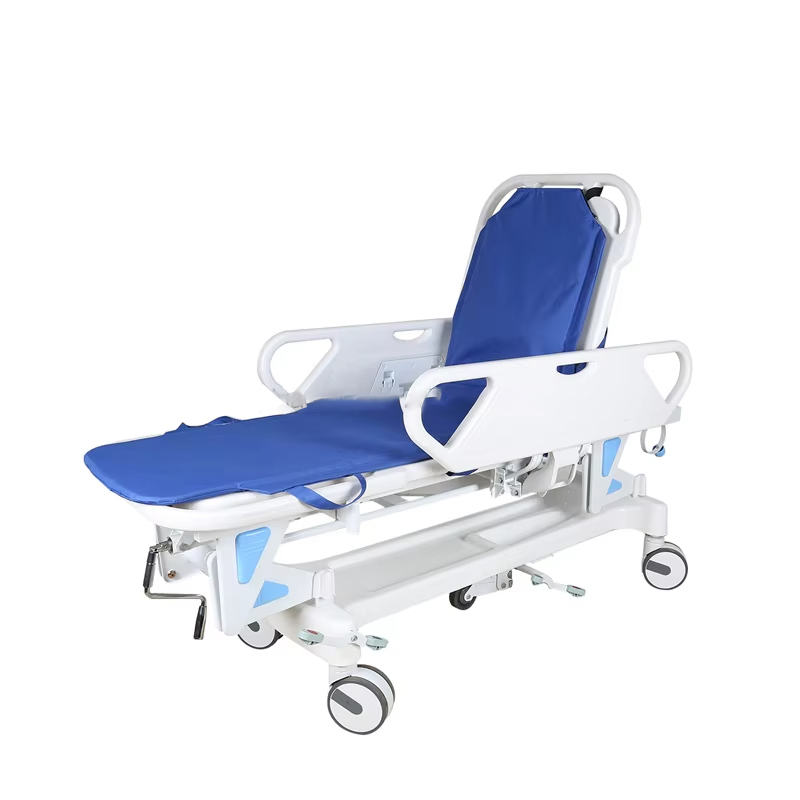
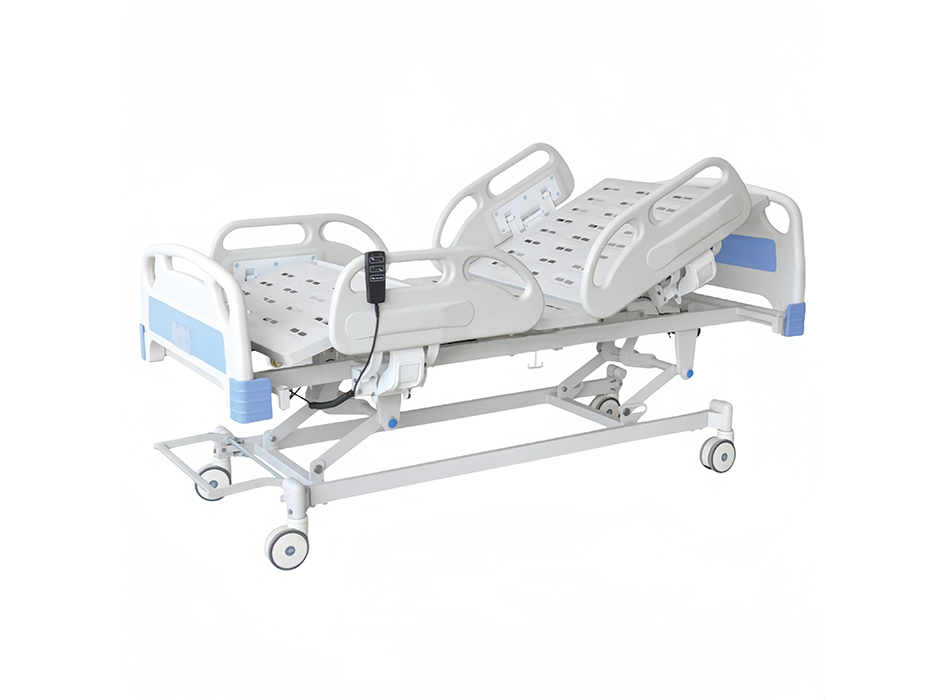 DB301 Electric Hospital Bed with Adjustable SectionsThis electric bed provides height and section adjustments that help caregivers reposition patients safely, making it a practical choice for general wards where frequent repositioning is required.View Product →
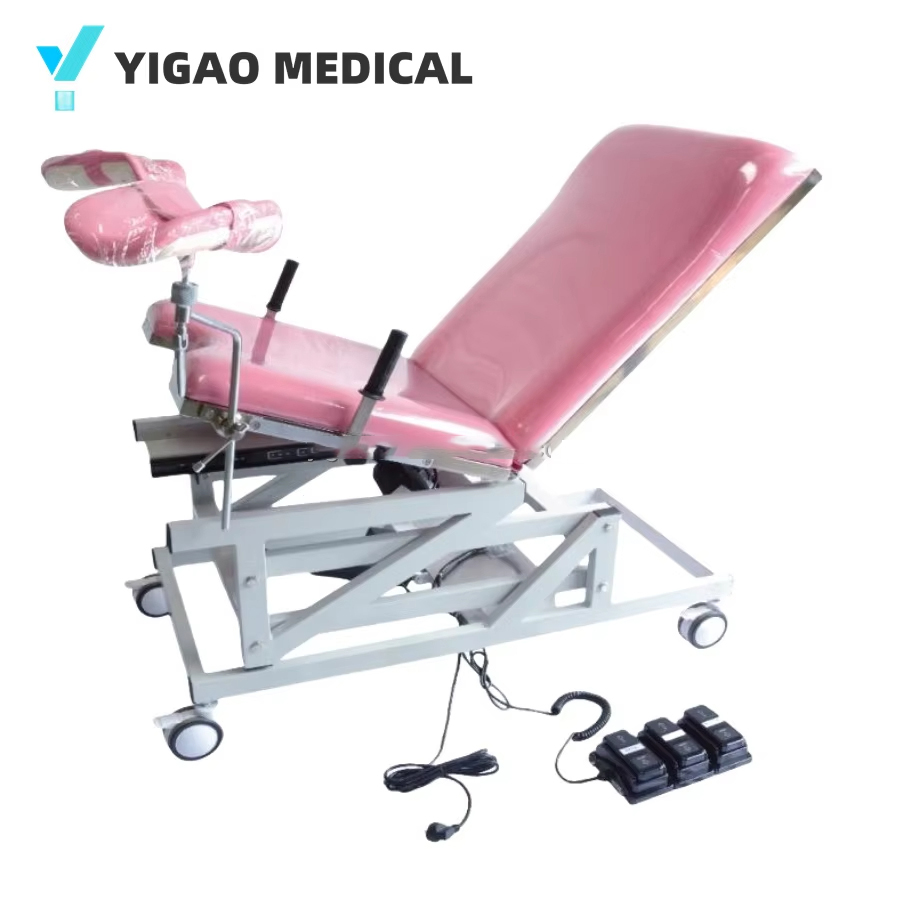
In examination rooms, a narrower medical examination couch is often preferable because the clinician can stand close to the patient without leaning over a wide bed. The bed surface should be covered with a clean sheet or disposable pad, and the frame must allow quick access to the perineum. Many delivery examination beds are designed for left-lateral positioning while maintaining enough space for the examiner to perform a digital rectal examination or a gynecologic evaluation.
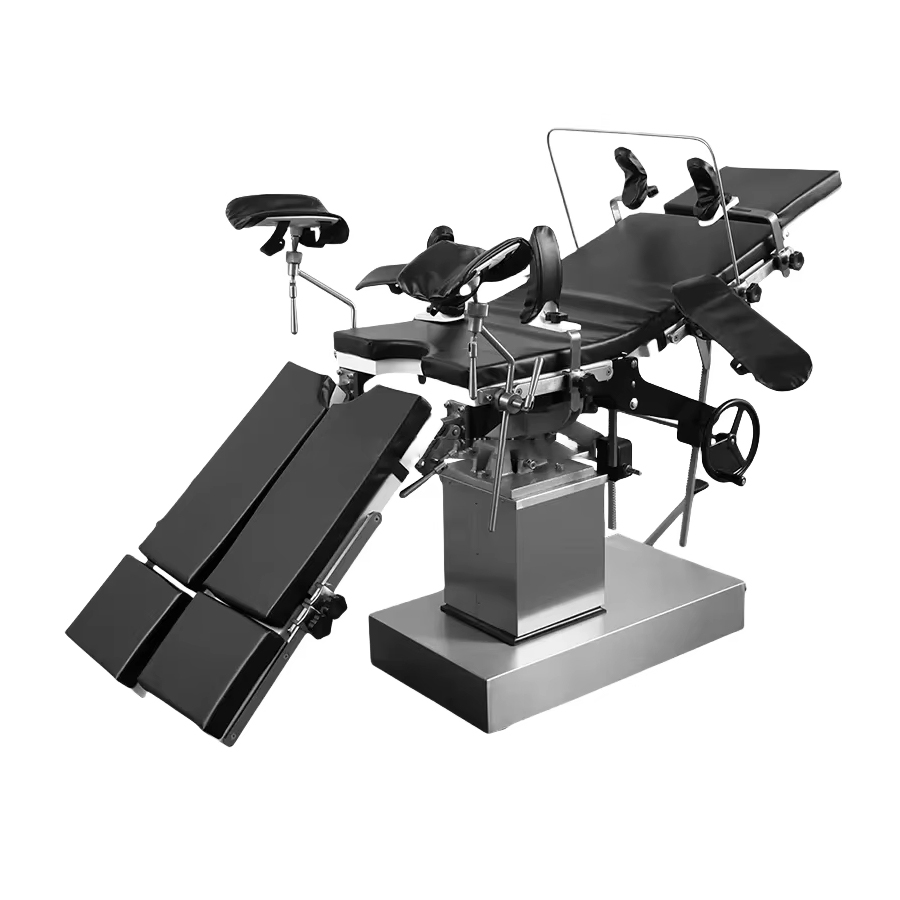
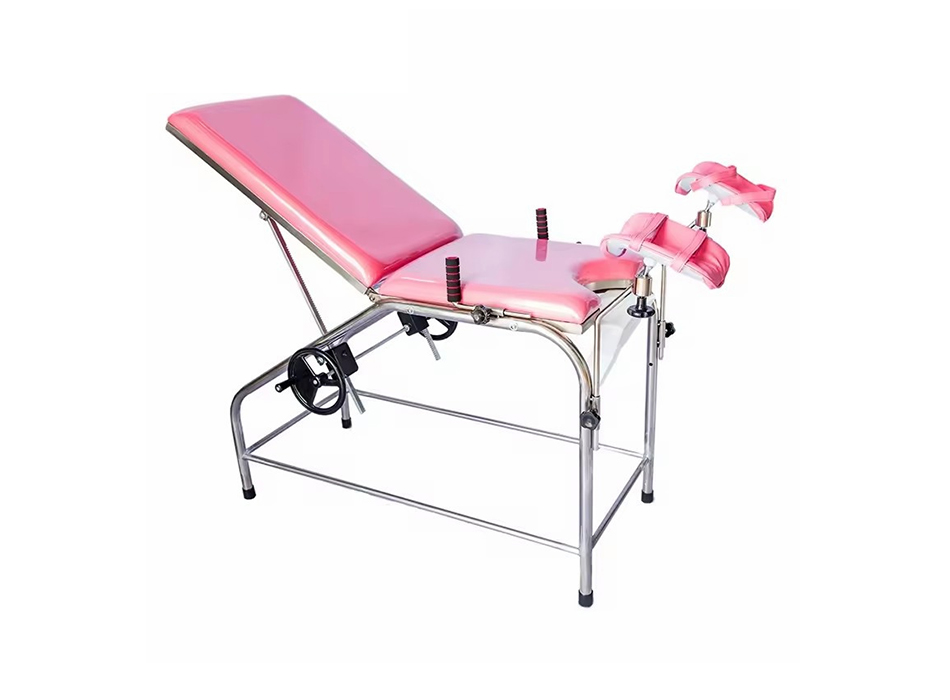 YGC2005A Stainless Steel Delivery Examination BedBuilt with stainless steel and a handwheel-operated backrest, this gynecological examination bed supports various clinical procedures and is suitable for obstetric units needing durable equipment.View Product →
For obstetric units, the same principle applies: the backrest can be raised slightly, and the patient can be turned onto the left side with pillows supporting the abdomen and upper leg. A manual hydraulic obstetric bed with adjustable height and backrest is a dependable option for units that need a lower-cost solution. Regardless of the model, the mattress should not sag because poor support makes it difficult to maintain the pelvic tilt required for Sims' position.
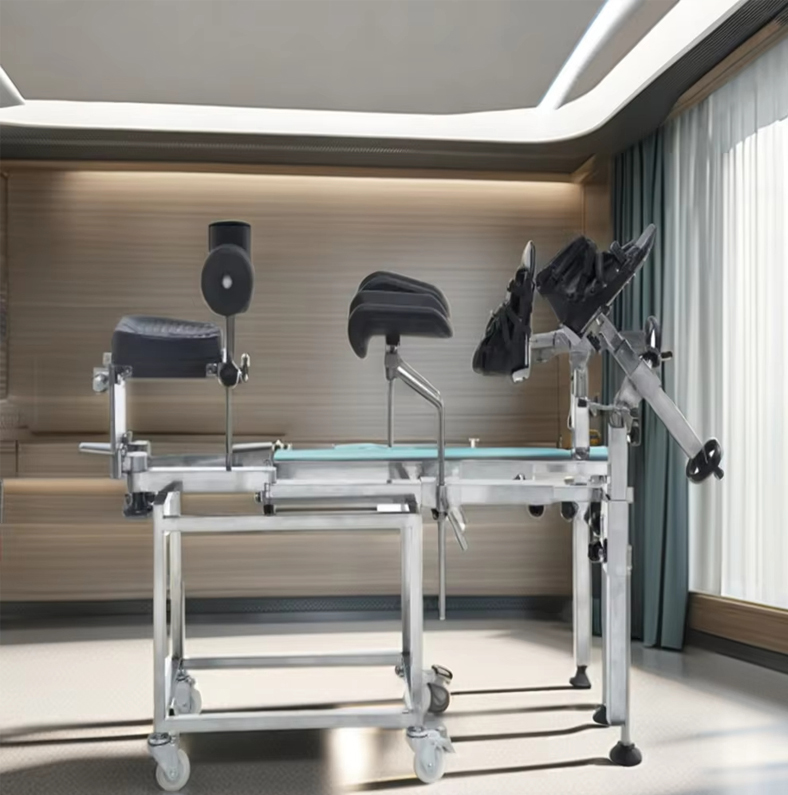
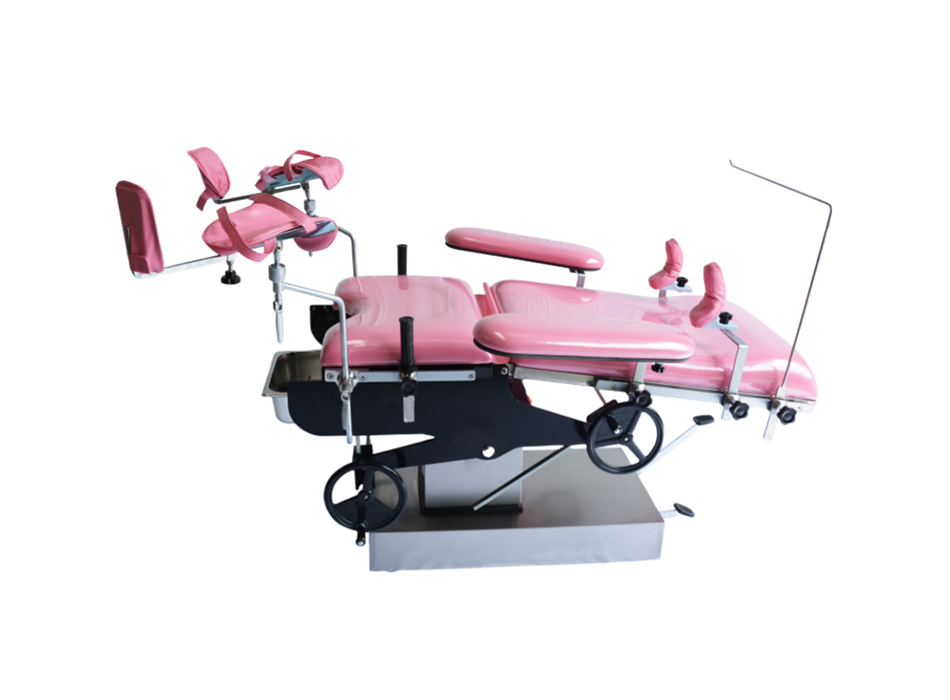 YGC2003A Hydraulic Obstetric Bed with Foot Pedal LiftThis hydraulic bed lifts via foot pedal and adjusts backrest and tilt with handwheels. Designed for gynecological exams and delivery, it offers a dependable, cost-effective option for obstetric units.View Product →
Yigao Medical's manual medical furniture line includes stable tables and beds for wards, minor procedure rooms, and examination suites. If the clinic mostly performs digital rectal exams, enemas, or gynecologic assessments, a height-adjustable manual examination table is usually enough.
For a full range of products built for these clinical tasks, review our medical examination couches and compare dimensions, cleaning options, and leg supports before purchasing.
| Setting | Recommended feature | Why it helps |
|---|---|---|
| General ward | Electric height adjustment | Reduces caregiver bending |
| Exam clinic | Narrow width, removable foot section | Easier access to perineum |
| Obstetric unit | Manual hydraulic or electric backrest | Safe pelvic tilt adjustments |
| Minor procedure room | Stainless steel or sealed mattress | Fast decontamination |
When you need to place a patient in Sims' position quickly, run through this checklist:
Sims' position is a core nursing skill because it protects the patient, improves outcomes for rectal and obstetric procedures, and reduces pressure injury risk. Master the steps, personalize the supports, and make sure the equipment around the patient gives you enough room to position them with control rather than compromise.
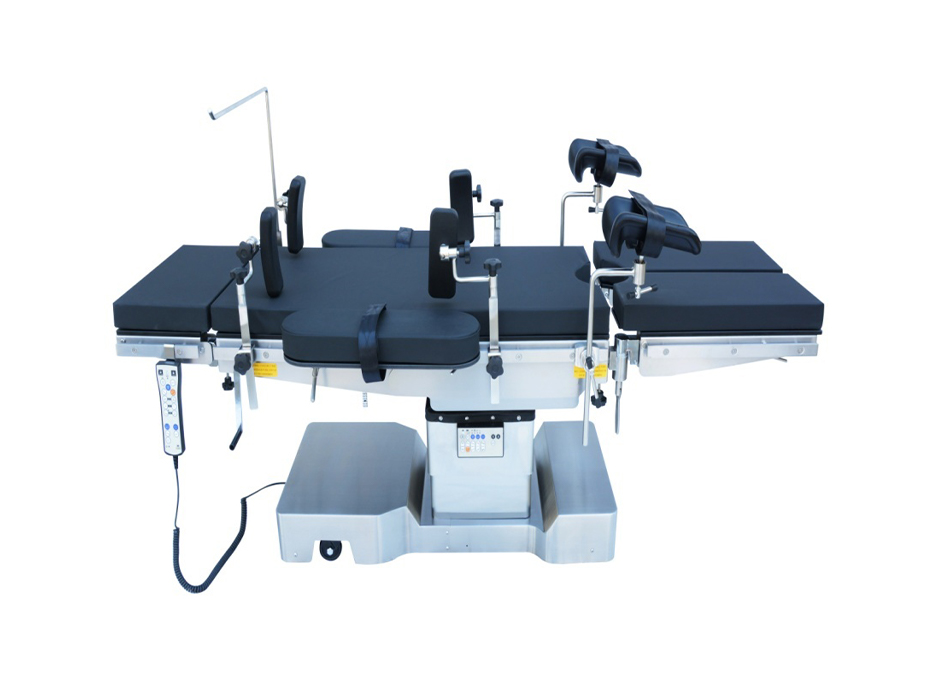
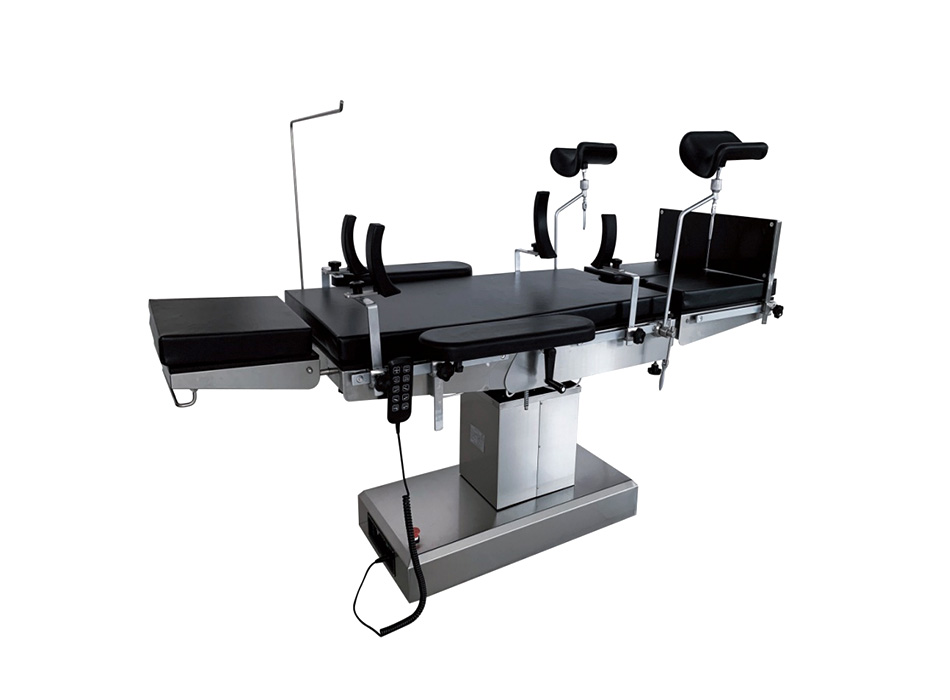
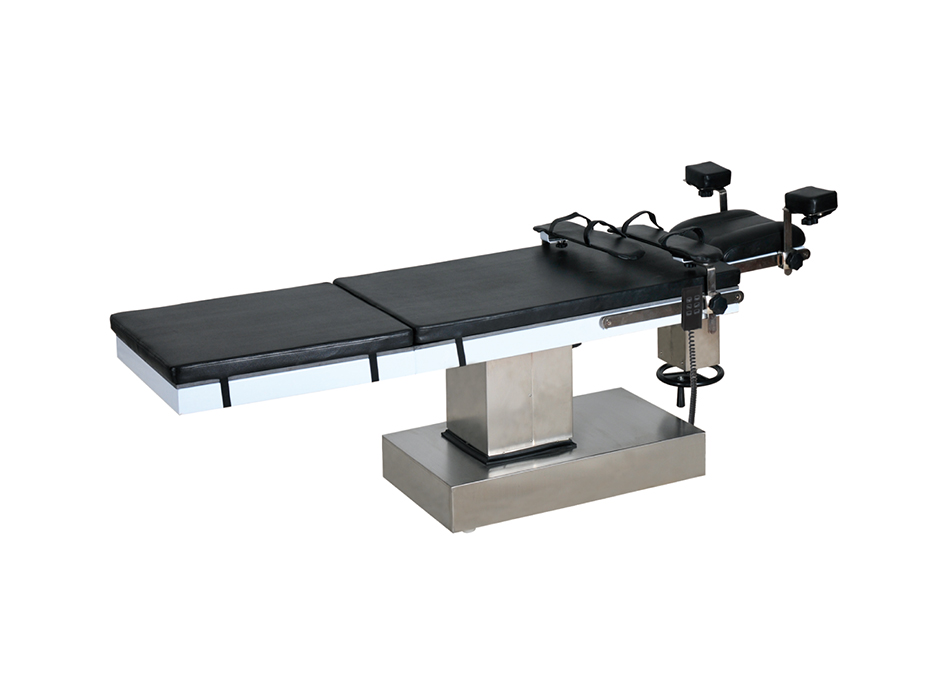
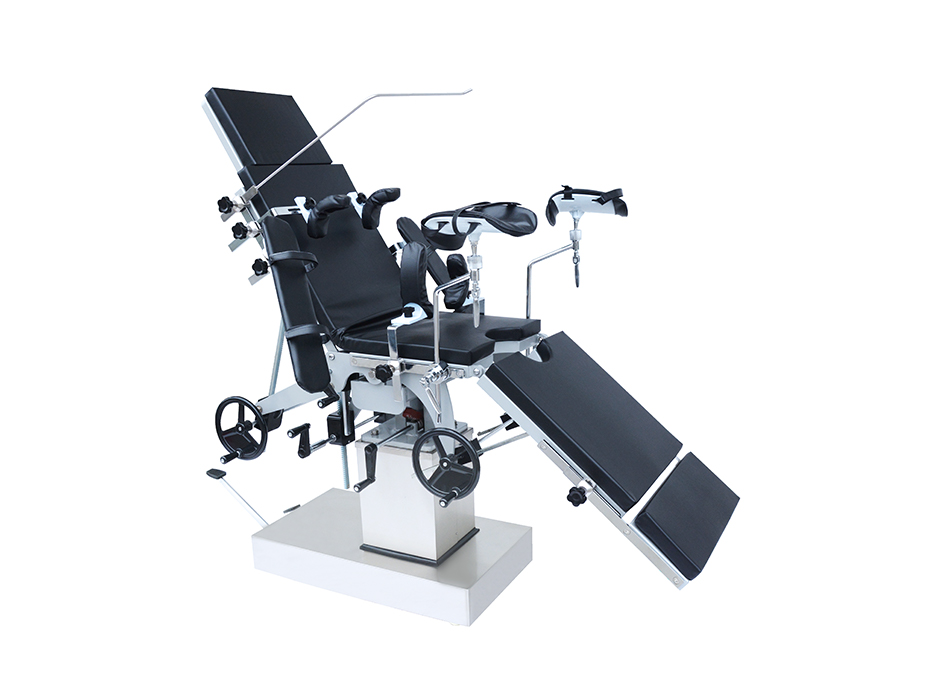
If you are interested in our products, please consult us
Copyright © 2026 Jiangsu Yigao Medical Equipment Technology Co., Ltd.

Custom Electric Medical Bed Manufacturers
The information provided on this website is intended for use only in countries and jurisdictions outside of the People's Republic of China.