Welcome to Jiangsu Yigao Medical


 ENG
ENG

 English
 Español
Welcome to Jiangsu Yigao Medical

After surgery, a coordinated team of 3–5 people uses a combination of transfer boards, slide sheets, and mechanical lifts to move you safely off the operating table — typically within 5–15 minutes of the procedure ending. You are not simply lifted by hand. Every movement is planned, communicated, and executed under direct supervision of the anesthesiologist, who monitors your airway and vital signs throughout the transfer.
The exact process depends on the type of surgery, your position during the operation, your body weight and condition, and whether you are conscious. This article walks through each stage in practical detail — from the moment the surgeon closes the incision to the moment you arrive in the recovery room.
Moving a patient off an operating table is never a one-person task. A standard transfer involves a clearly defined team, each with a specific role:
Safe patient handling guidelines from the American Nurses Association (ANA) recommend that no caregiver manually lift more than 35 lbs (16 kg) of a patient's body weight — meaning mechanical aids are required for virtually all adult transfers.
Before anyone touches you to move you, the anesthesiologist begins reversing or allowing the anesthetic to wear off. What happens depends on the type of anesthesia used:
Inhaled anesthetic agents (such as sevoflurane or desflurane) are turned off, and the patient breathes off the gas over 5–15 minutes. If neuromuscular blocking agents were used to keep muscles relaxed during surgery, reversal drugs are administered — most commonly neostigmine or the newer agent sugammadex, which can reverse deep paralysis in under 3 minutes. Once the patient shows signs of adequate breathing and begins responding to commands, the endotracheal tube (breathing tube) is removed — a process called extubation.
Patients who had spinal, epidural, or nerve block anesthesia may be partially or fully conscious during transfer but will have limited or no sensation and movement in the affected area. They are moved the same way — with the same mechanical aids — because even a conscious patient cannot reliably control a numb limb.
For procedures done under monitored anesthesia care (MAC) or deep sedation, patients are often drowsy but arousable by the time surgery ends. These patients may be able to assist slightly with their own transfer, but the team still uses mechanical aids and does not rely on patient cooperation.
Before the patient is physically moved, the circulating nurse performs a systematic check to prevent any line, tube, or drain from being pulled or dislodged during transfer. This is one of the most critical safety steps in the process.
Accidental line dislodgement during transfer is a recognized patient safety event. A 2019 Joint Commission Sentinel Event report identified tubing and line errors during patient transport as a contributing factor in several adverse outcomes — underscoring why this preparation step is never skipped.
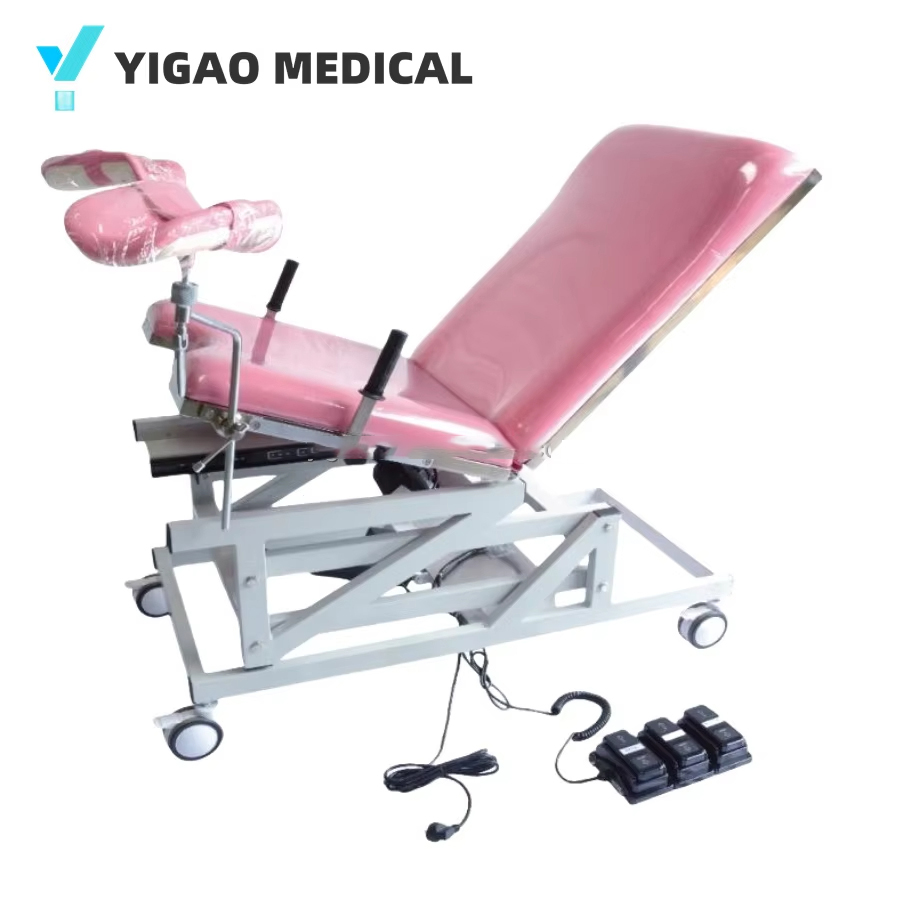
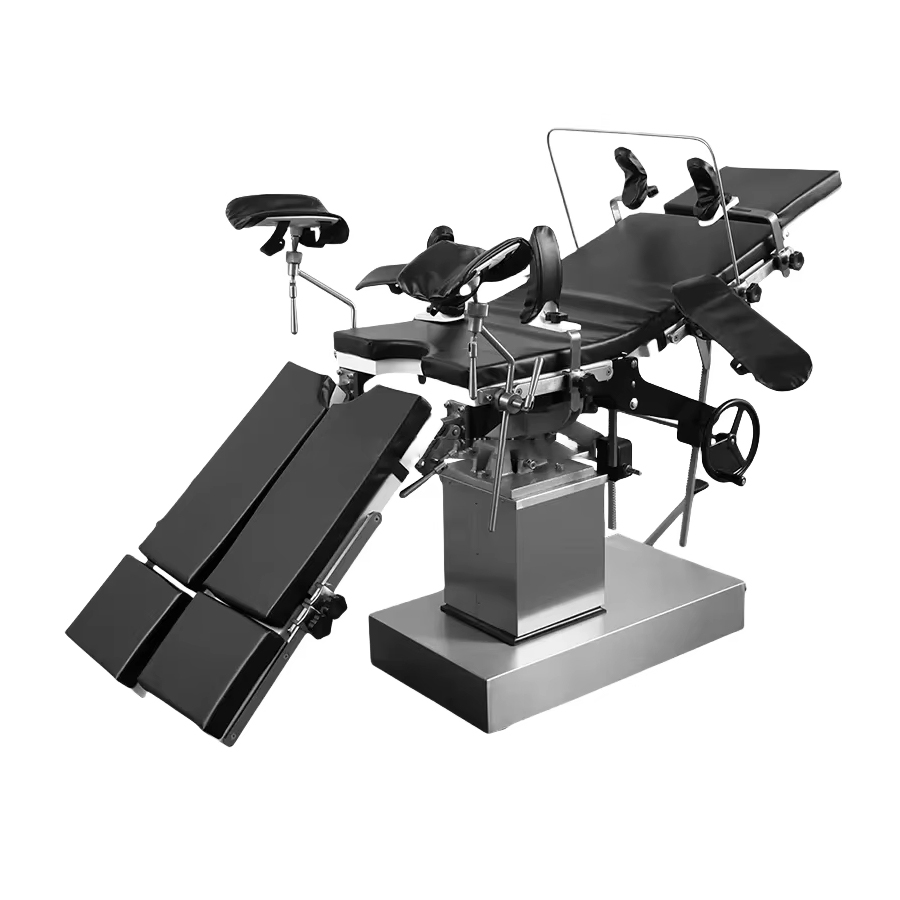
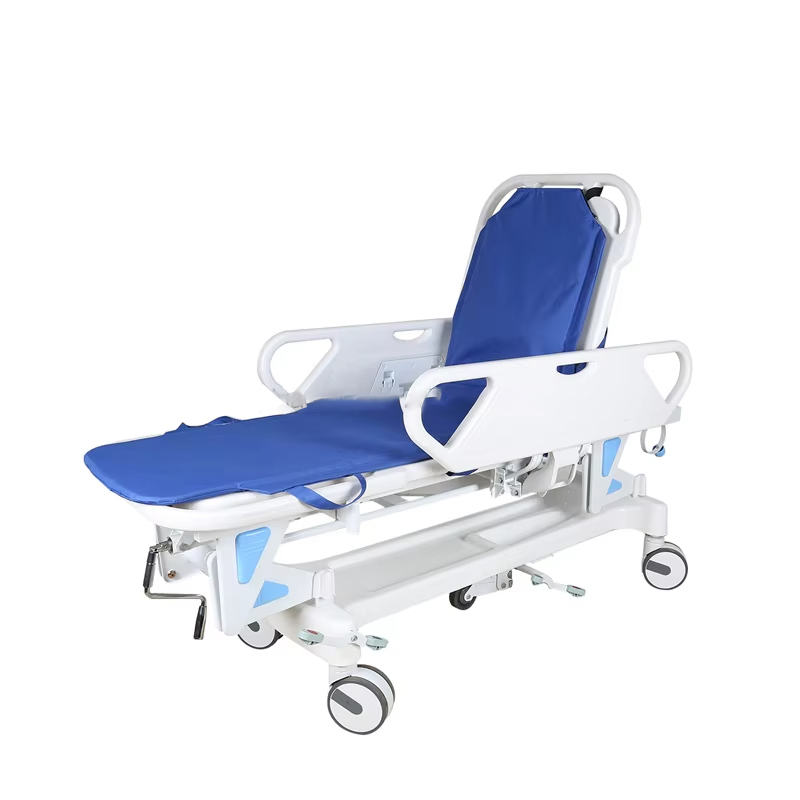
The gurney (transport bed) is brought alongside the operating table and locked in place. The table and gurney are adjusted to the same height to minimize vertical movement. The following tools are used to move the patient laterally:
A smooth, rigid board is slid halfway under the patient and halfway onto the gurney, bridging the gap. Team members on the gurney side pull a slide sheet while those on the table side guide the patient across. This reduces friction and eliminates lifting. Most hospitals now use low-friction slide sheets (made of nylon or PTFE-coated fabric) in combination with the board, allowing a patient to be moved with as little as 20–30% of the force that would be required without aids.
For bariatric patients or complex cases, inflatable air mattresses (such as the HoverMatt or AirPal) are placed under the patient and inflated with a blower to create a thin cushion of air. This reduces the friction to near zero, allowing a 400 lb (180 kg) patient to be moved laterally with minimal force. Many Level I trauma centers and bariatric surgery programs have these devices available in every OR.
For lighter patients or when mechanical aids are not available, a draw sheet (a folded bed sheet placed under the patient) is used as a sling. Team members on both sides grip the sheet and slide the patient across on a coordinated count called by the anesthesiologist — typically "on three: one, two, three." A minimum of three people is required for this method, and four or five for patients over 200 lbs (90 kg).
The position you were in during surgery determines how the team repositions you for transport. Different procedures require different intraoperative positions, each with its own transfer considerations.
| Surgical Position | Common Procedures | Transfer Method | Key Precautions |
|---|---|---|---|
| Supine (on back) | Abdominal, cardiac, general | Lateral slide to gurney | Keep head neutral; protect IV sites |
| Prone (face down) | Spine, posterior shoulder | Log-roll to supine, then slide | Spine alignment critical; 4–5 staff needed |
| Lateral decubitus (on side) | Hip replacement, thoracic | Roll to supine, lateral slide | Protect operative hip; remove bean bag positioner first |
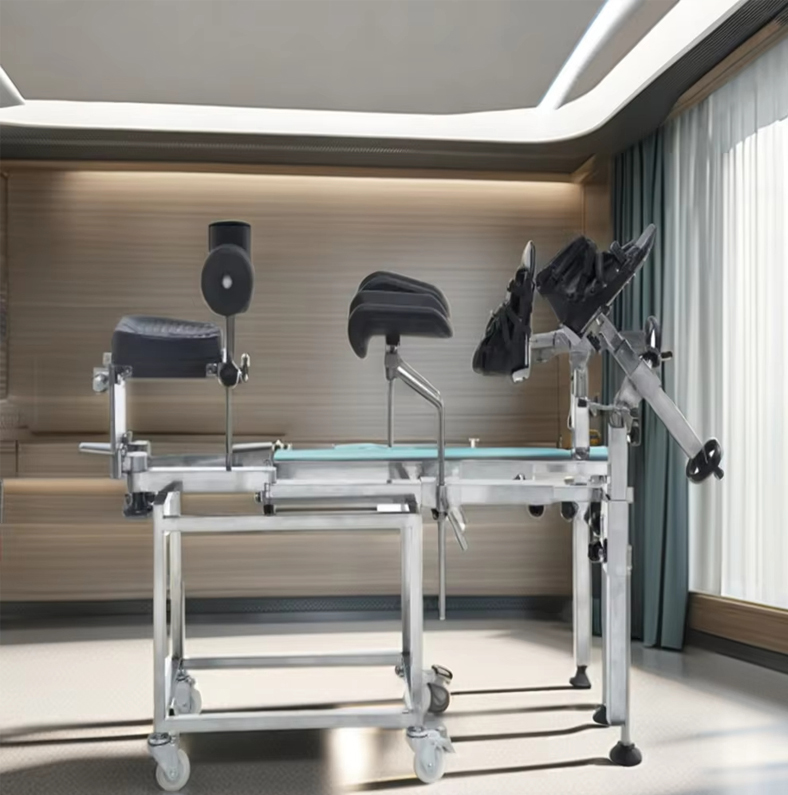
| Lithotomy (legs elevated) | Gynecology, colorectal | Lower legs simultaneously, then slide | Both legs lowered together to prevent blood pressure drop |
| Trendelenburg (head down) | Laparoscopic pelvic surgery | Return table to flat, then lateral slide | Watch for post-position blood pressure changes |
| Sitting / Beach Chair | Shoulder arthroscopy | Recline table to flat, lateral slide | Orthostatic hypotension risk; slow position change |
The prone-to-supine repositioning is one of the most demanding transfers in the OR. With the patient's airway face-down, the breathing tube must be carefully supported while 4–5 staff members perform a synchronized log-roll on a single count, keeping the spine in perfect alignment.
The endotracheal tube (ETT) — if one was placed — is one of the most critical things managed during transition off the table. The anesthesiologist controls this entirely.
In most routine surgeries, extubation (removing the breathing tube) happens on the operating table, before transfer to the gurney. The anesthesiologist waits until the patient:
However, in ICU cases, complex airway surgeries, or patients with respiratory compromise, the tube remains in place during transport. In these cases the anesthesiologist manually ventilates the patient with a bag-valve device during transfer and hands the patient off to ICU staff with the tube still secured.
Transfer off the operating table is a physiologically vulnerable moment. Anesthesia drugs still circulate, blood pressure can drop with position changes, and pain may begin as anesthesia lightens. The team does not simply move the patient and hope for the best — monitoring is continuous.
Standard monitoring during transfer includes:
The ASA Standards for Basic Anesthetic Monitoring require that oxygenation, ventilation, circulation, and temperature be monitored continuously — and this standard explicitly extends through the transport phase, not just the intraoperative period.
Standard transfer protocols are modified significantly for patients who fall outside typical parameters.
Infants and small children are often carried directly from the operating table to a warming transport incubator or pediatric gurney. Because of their small size, temperature loss is a major concern — OR temperatures for neonatal cases are often set above 80°F (27°C) and warm blankets are applied immediately. The anesthesiologist maintains one hand on the airway at all times during any movement.
For patients over approximately 300 lbs (136 kg), standard slide boards and draw sheets are insufficient. Most bariatric programs use air-assisted lateral transfer devices and wide-capacity gurneys rated to 1,000 lbs (454 kg). The operating table itself must be a bariatric model, and transfer is planned before the patient enters the OR — including confirming the route to the recovery room accommodates the wider equipment.
Patients who remain hemodynamically unstable at the end of surgery (ongoing bleeding, cardiac instability) may be transferred directly to the ICU with active IV drips running, ventilator support in place, and a full anesthesia or critical care team accompanying them. In these cases the operating table may itself be wheeled to radiology or ICU before the patient is moved, to minimize transfer events.
Once the patient is on the gurney and stable, they are wheeled to the Post-Anesthesia Care Unit (PACU) — commonly called the recovery room. The journey typically takes 2–5 minutes depending on hospital layout. During transport, the anesthesiologist or CRNA walks alongside, managing oxygen and monitoring.
On arrival in the PACU, a structured verbal handoff is given to the recovery nurse. This handoff follows a standardized format — many hospitals use the SBAR framework (Situation, Background, Assessment, Recommendation) — and covers:
The PACU nurse connects the patient to the unit's monitoring system, assesses the Aldrete Score (a 10-point recovery scoring system evaluating activity, respiration, circulation, consciousness, and oxygen saturation), and begins the recovery phase. A score of 9 or 10 out of 10 is typically required before discharge from PACU to a ward or home.
Many patients have no memory of the transfer whatsoever — the amnesic effects of anesthetic agents like propofol and benzodiazepines extend through this period. However, some patients do regain partial awareness during transport, which can be disorienting.
If you wake up during transfer, you may notice:
It is completely normal to feel confused, emotional, or unable to form clear sentences in the first 10–30 minutes after general anesthesia. The recovery room team expects this and will calmly orient you to where you are and confirm that your surgery is over.
Falls and injuries during OR-to-gurney transfers, while uncommon, represent a recognized patient safety risk. Hospitals employ multiple layers of protection:
According to a study in the Journal of PeriAnesthesia Nursing, implementing mechanical transfer aids in ORs reduced staff musculoskeletal injuries by up to 60% while also improving patient comfort and safety scores — demonstrating that good technique protects everyone involved.
If you are interested in our products, please consult us
Copyright © 2026 Jiangsu Yigao Medical Equipment Technology Co., Ltd.

Custom Electric Medical Bed Manufacturers
The information provided on this website is intended for use only in countries and jurisdictions outside of the People's Republic of China.